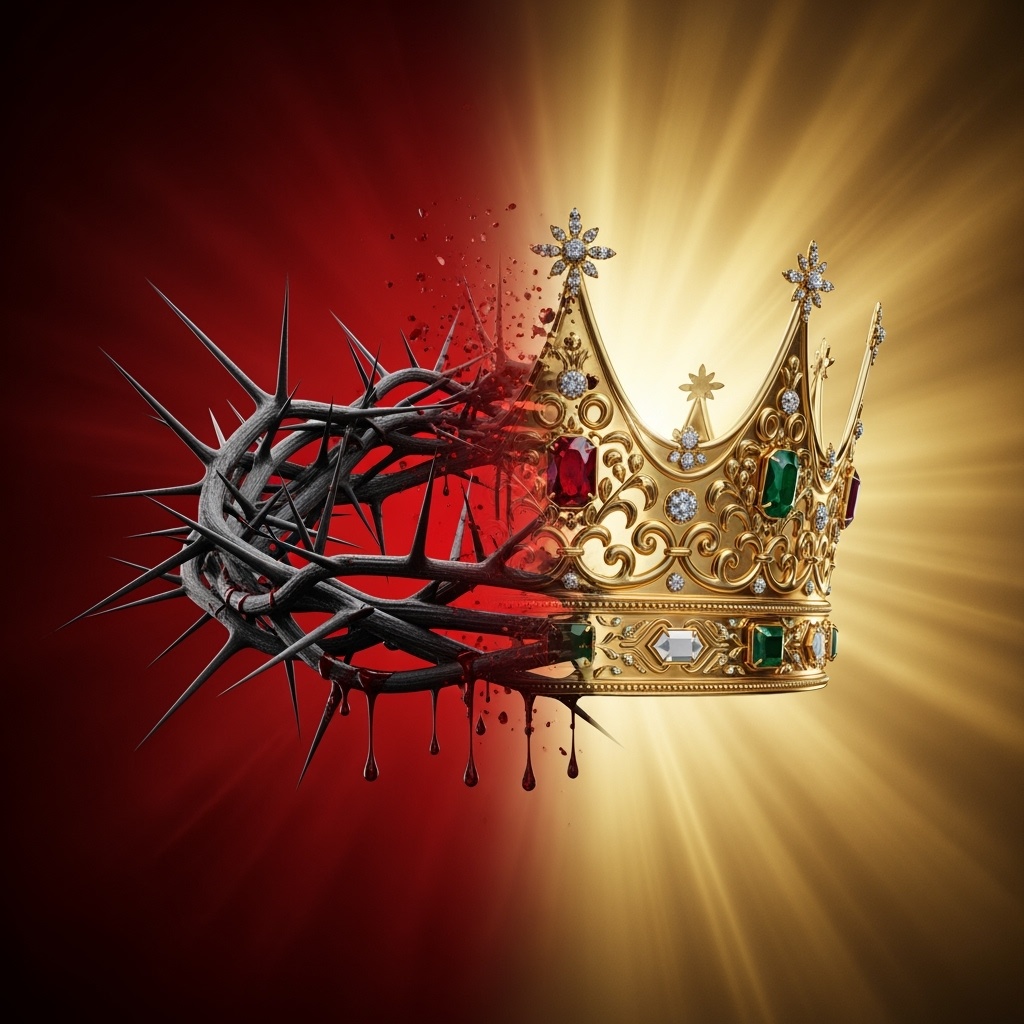
When we think of a coronation, we picture crowns, trumpets, and cheering crowds. But the coronation of Jesus didn’t happen in a palace or cathedral—it happened in heaven itself. His ascension was more than a farewell; it was His enthronement. In that moment, the risen Lamb became the reigning Lion.
A Seat Beside Majesty
The writer of Hebrews puts it this way:
“When He had made purification of sins, He sat down at the right hand of the Majesty on high” (Hebrews 1:3).
That’s not symbolic fluff. Sitting at God’s right hand means sharing His authority, rule, and glory. The cross now wears a crown. This is exactly what Daniel foresaw: “One like a son of man” was given authority, glory, and sovereign power (Daniel 7:13–14).
The King Has Come
Jesus didn’t suddenly become King after the resurrection—He had always been King. From His birth, He was announced as the One who would reign on David’s throne forever. Throughout His ministry, He declared, “The kingdom of God is at hand; repent and believe” (Mark 1:15).
With that announcement, He was:
- Declaring that God’s rule had arrived through Himself
- Calling people to repentance and faith
- Fulfilling centuries of prophecy
- Planting a kingdom-seed that would one day fill the earth
Wherever the King goes, the Kingdom follows. The light of heaven invades the darkness of earth.
A King Mocked Before He Was Crowned
As Jesus entered Jerusalem on a donkey, He fulfilled Zechariah 9:9—but disappointed Jewish expectations and amused Roman ones. A donkey was no warhorse.
When Pilate asked, “Are you a king?” Jesus replied, “Yes—but my kingdom is not of this world” (John 18:36). Soldiers mocked Him with a crown of thorns, a purple robe, and sarcastic shouts: “Hail, King of the Jews!” Pilate even had the charge nailed above His head: “Jesus of Nazareth, King of the Jews.”
The irony? What they mocked was true. He is King—not just of the Jews, but of all people everywhere.
The King Proclaimed
After His resurrection and ascension, His kingship was no secret. Peter announced it at Pentecost:
“This Jesus God raised up again… exalted to the right hand of God” (Acts 2:32–33).
Paul echoed the same truth: “God raised Him… seated Him at His right hand… far above all rule and authority” (Ephesians 1:20–23).
And in Revelation, John sees the Lamb on the throne, surrounded by worshippers declaring Him worthy of all power, glory, and honor (Revelation 5:11–12).
Before His crucifixion, Jesus rode into Jerusalem on a donkey. When He returns, He will be riding a white horse (Revelation 19).
King and Lord
Revelation 17:14 calls Him “Lord of lords and King of kings.” Those titles overlap, but they aren’t identical.
- Lord points to our personal relationship with Him—Master and servant.
- King points to His role as Messiah, ruling on David’s throne forever.
Together, they emphasize His total authority. Calling Him “King” means more than giving Him allegiance; it means aligning our lives with His kingdom—its culture, its values, and its mission.
What This Means for Us
Right now, Jesus reigns. His rule may be invisible on earth, but it is very real in heaven—and in the hearts of His disciples. Every act of love, every transformed life, every person who turns to Him is living evidence that the Kingdom of God is here and advancing.
The Servant is now the Sovereign. The Lamb is now the Lion. The crown of thorns has become the crown of glory.
One day, His invisible reign will be visible to every eye:
“At the name of Jesus, every knee should bow… and every tongue confess that Jesus Christ is Lord” (Philippians 2:10–11).
Looking Ahead
The King who now rules in grace will return in glory. And when He does, there will be no mocking robe or thorny crown—only majesty, power, and justice.
Stay tuned for Act 7: Justice Wears a Robe – His Examination, where Christ returns not as a Servant but as a Judge, clothed in justice and authority.
Discussion Questions
- How does seeing Jesus’ ascension as a coronation change the way you understand His kingship today?
- Why do you think people in Jesus’ day struggled to accept Him as King? In what ways do people today still struggle with that?
- What does it mean to say, “Wherever the King goes, the Kingdom follows”?