TADB 144: The Gospel Act 7 – Justice Now Wears a Robe

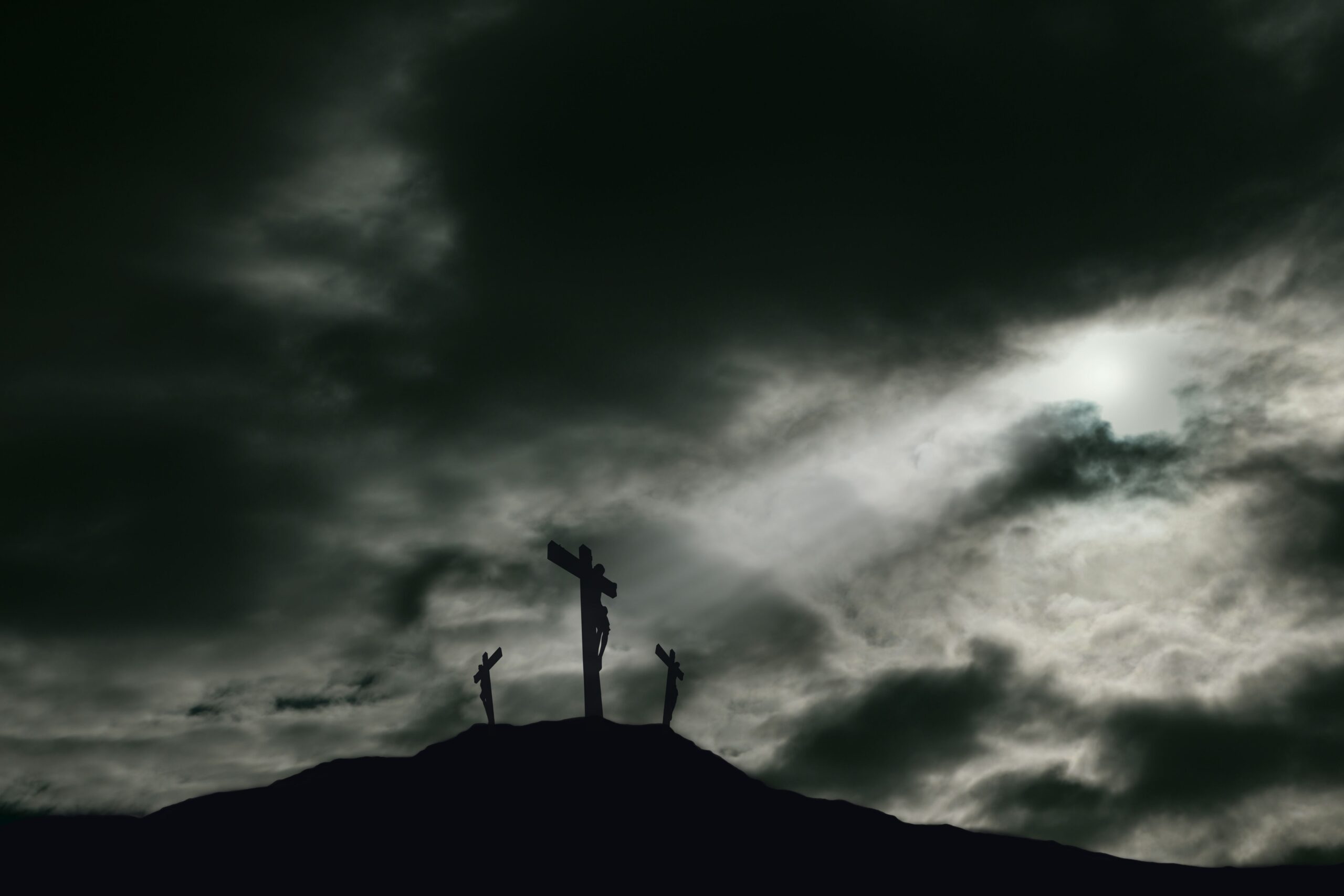
The gospel doesn’t end at the cross. It ends in the courtroom—where Jesus, the Judge, wears the robe of justice.. At the final exam, only one passport is valid: citizenship in Christ’s kingdom. No dual citizenships allowed

History crescendos to its finale. The invisible King becomes visible—the victorious King of Kings. With the hosts of heaven, Jesus will appear in blazing glory. There will be no doubt who He is:

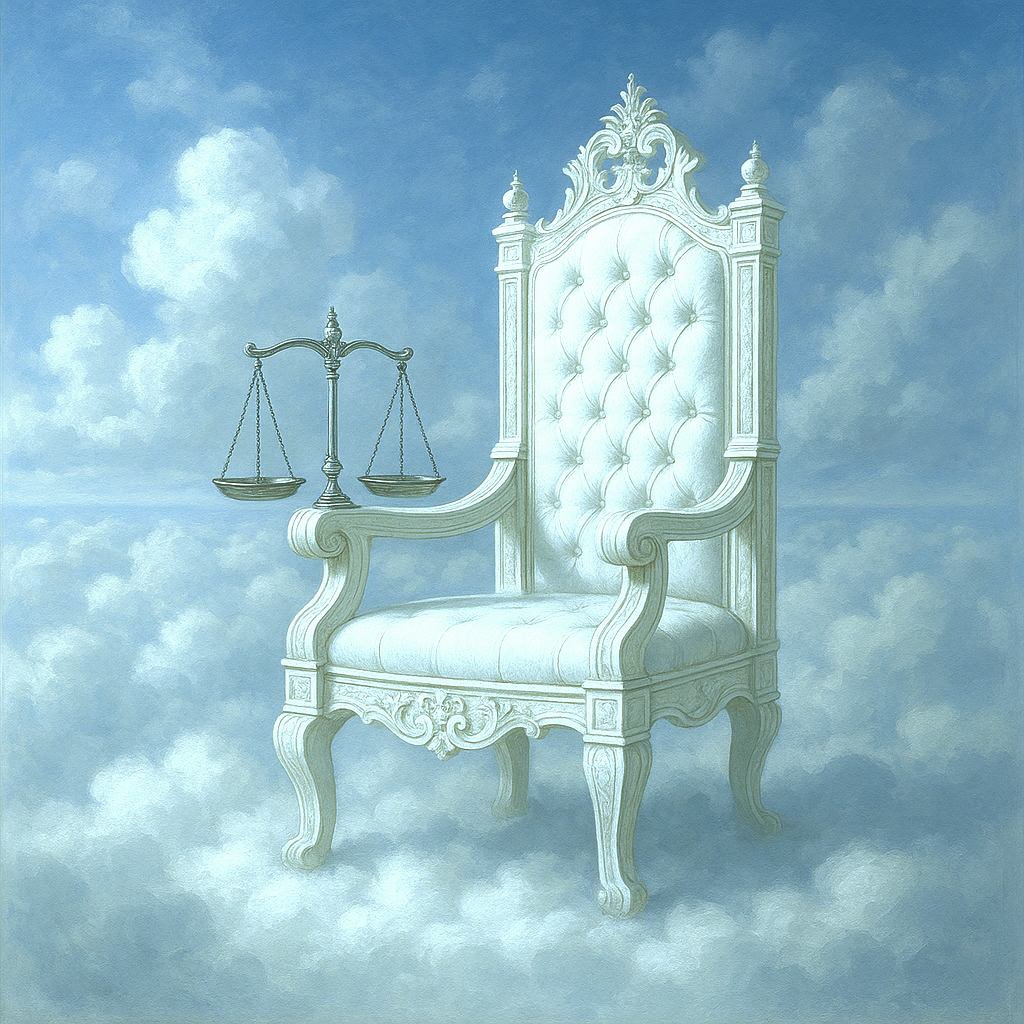
“When the Son of Man comes in His glory, and all the angels with Him, then He will sit on His glorious throne” (Matthew 25:31).

“Then I saw a great white throne and Him who sat upon it” (Revelation 20:11).

At His return, Jesus summons all people—past and present—before His throne (2 Thessalonians 1:7). No one is exempt. It is time for the final exam.

Jesus: The Judge

When He walked the dusty roads of Galilee, Jesus shocked the religious leaders not only by claiming equality with God but also by declaring that He Himself would judge the world:

“For not even the Father judges anyone, but He has given all judgment to the Son” (John 5:22).

He described the day when all nations will be gathered before Him, and like a shepherd He will separate the sheep from the goats (Matthew 25:32–33).

The Apostle Paul carried this same message:

  • To Athens: “He has set a day on which He will judge the world in righteousness… by raising Him from the dead” (Acts 17:30–31).
  • To Governor Felix: “As he discussed righteousness, self-control, and the judgment to come, Felix became frightened” (Acts 24:25).

Even the Apostles’ Creed affirms this final act of the gospel:

“From there He will come to judge the living and the dead.”

The King now puts on His robe as Judge. 

Judgment: Based on Merit—But Whose?

Many assume God grades on a curve. He doesn’t.  Scripture is clear: God’s standard is absolute holiness. His justice demands perfection.

But here the gospel shines: through the cross, Jesus offered Himself as the perfect substitute. He satisfied justice and now clothes those who believe with His righteousness. God’s holiness stands, His justice is upheld, and His mercy is revealed.

Sheep and Goats: Two Destinies

Jesus’ parable reveals the final verdict (Matthew 25:32-33):

  • The Goats — Rely on their own merit. Their deeds fall short. Verdict: Unacceptable. Banished from God’s presence.
  • The Sheep — Trust in Christ’s merit. They surrendered their efforts long ago and received His gift of righteousness. Verdict: Eternal life in God’s presence.

The difference? Not merit, but trust.

A Heart Transplant

The prophets diagnosed humanity’s condition: “The heart is deceitful above all things and beyond cure” (Jeremiah 17:9).

Our only hope is a new heart: “I will remove from you your heart of stone and give you a heart of flesh” (Ezekiel 36:26).

Rejecting Christ is not merely dying of disease—it is refusing the cure. As John writes: “The one who believes in Him is not judged; the one who does not believe has been judged already” (John 3:18).

Citizenship Exam: One Passport Allowed

The judgment also reveals our citizenship. We all begin as citizens of darkness. Jesus startled His hearers by saying their father was not Abraham but Satan. But Paul offers hope:

“He has rescued us from the domain of darkness and transferred us to the kingdom of His beloved Son” (Colossians 1:13–14).

At heaven’s gate, only one passport is valid—citizenship in Christ’s kingdom.

The Beginning of Forever

When Jesus returns:

  • The Book of Life will be opened.
  • Hypocrisy will be exposed.
  • Faithfulness will be rewarded.
  • The redeemed will be presented to the Father.

The curtain falls—but only on this age. What comes next is the beginning of forever: sin abolished, Satan banished, and the redeemed dwelling in the joy of the Triune God.

The Gospel in Seven Acts

The gospel is the whole story of Jesus. Each Act is essential, each defining His mission and identity.

ActEventPlaceRoleTitle
1IncarnationWombSon of ManHeaven takes a breath
2DemonstrationIsraelMessiahDeity walks in the dust
3CrucifixionCrossSaviorPerfection gains a scar
4ResurrectionTombConquerorThe sunrise no one expected
5AscensionHeavenRepresentativeHumanity enters heaven
6CoronationThroneKingThe Lamb becomes the Lion
7ExaminationCourtroomJudgeJustice wears a robe

The Apostles’ Creed and the 7 Acts of the gospel

The early church captured this seven-act gospel in the Apostles’ Creed. Notice how each defining moment is woven into its confession of faith.

I believe in God, the Father almighty,

     Creator of heaven and earth.

I believe in Jesus Christ, his only Son, our Lord,

     Who was conceived by the Holy Spirit

     and born of the Virgin Mary. (Act 1)

     He suffered under Pontius Pilate, (Act 2)

     was crucified, died, and was buried; (Act 3)

     He descended to the dead.

     The third day, He rose again from the dead. (Act 4)

     He ascended to heaven (Act 5)

     and is seated at the right hand of God the Father almighty. (Act 6)

     From there he will come to judge the living and the dead. (Act 7)

The gospel is the whole story of Jesus—His birth, life, death, resurrection, ascension, coronation, and return as Judge.

It is both invitation and warning:

  • Invitation into eternal life, citizenship in His kingdom, and joy in His presence.
  • Warning of judgment for those who trust their own merit.

As Paul declared:

“I am not ashamed of the gospel, for it is the power of God for salvation to everyone who believes” (Romans 1:16).

As Christ’s ambassadors, can we proclaim the whole gospel—clear, complete, and powerful?

For Reflection

1.  When you think about Jesus’ return, what emotions surface first—fear, hope, awe, or something else? Why?

2.  How does the “heart transplant” metaphor (Ezekiel 36:26) clarify the difference between religion and gospel?

3.  Why is it significant that there are no “dual citizenships” in God’s kingdom? What does this reveal about true discipleship?

4. How should the reality of a coming judgment shape the way we live today—in holiness, mission, and hope?

5.  The article ends with “the beginning of forever.” What excites you most about eternity with Christ?

TADB 143: The Gospel Act 6- The Lamb becomes the Lion

The Lamb who was slain now wears the crown.
Jesus’ ascension wasn’t just a return to heaven—it was His coronation.

When we think of a coronation, we picture crowns, trumpets, and cheering crowds. But the coronation of Jesus didn’t happen in a palace or cathedral—it happened in heaven itself. His ascension was more than a farewell; it was His enthronement. In that moment, the risen Lamb became the reigning Lion.

A Seat Beside Majesty

The writer of Hebrews puts it this way:

“When He had made purification of sins, He sat down at the right hand of the Majesty on high” (Hebrews 1:3).

That’s not symbolic fluff. Sitting at God’s right hand means sharing His authority, rule, and glory. The cross now wears a crown. This is exactly what Daniel foresaw: “One like a son of man” was given authority, glory, and sovereign power (Daniel 7:13–14).

The King Has Come

Jesus didn’t suddenly become King after the resurrection—He had always been King. From His birth, He was announced as the One who would reign on David’s throne forever. Throughout His ministry, He declared, “The kingdom of God is at hand; repent and believe” (Mark 1:15).

With that announcement, He was:

  • Declaring that God’s rule had arrived through Himself
  • Calling people to repentance and faith
  • Fulfilling centuries of prophecy
  • Planting a kingdom-seed that would one day fill the earth

Wherever the King goes, the Kingdom follows. The light of heaven invades the darkness of earth.

A King Mocked Before He Was Crowned

As Jesus entered Jerusalem on a donkey, He fulfilled Zechariah 9:9—but disappointed Jewish expectations and amused Roman ones. A donkey was no warhorse.

When Pilate asked, “Are you a king?” Jesus replied, “Yes—but my kingdom is not of this world” (John 18:36). Soldiers mocked Him with a crown of thorns, a purple robe, and sarcastic shouts: “Hail, King of the Jews!” Pilate even had the charge nailed above His head: “Jesus of Nazareth, King of the Jews.”

The irony? What they mocked was true. He is King—not just of the Jews, but of all people everywhere.

The King Proclaimed

After His resurrection and ascension, His kingship was no secret. Peter announced it at Pentecost:

“This Jesus God raised up again… exalted to the right hand of God” (Acts 2:32–33).

Paul echoed the same truth: “God raised Him… seated Him at His right hand… far above all rule and authority” (Ephesians 1:20–23).

And in Revelation, John sees the Lamb on the throne, surrounded by worshippers declaring Him worthy of all power, glory, and honor (Revelation 5:11–12).

Before His crucifixion, Jesus rode into Jerusalem on a donkey.  When He returns, He will be riding a white horse (Revelation 19).

King and Lord

Revelation 17:14 calls Him “Lord of lords and King of kings.” Those titles overlap, but they aren’t identical.

  • Lord points to our personal relationship with Him—Master and servant.
  • King points to His role as Messiah, ruling on David’s throne forever.

Together, they emphasize His total authority. Calling Him “King” means more than giving Him allegiance; it means aligning our lives with His kingdom—its culture, its values, and its mission.

What This Means for Us

Right now, Jesus reigns. His rule may be invisible on earth, but it is very real in heaven—and in the hearts of His disciples. Every act of love, every transformed life, every person who turns to Him is living evidence that the Kingdom of God is here and advancing.

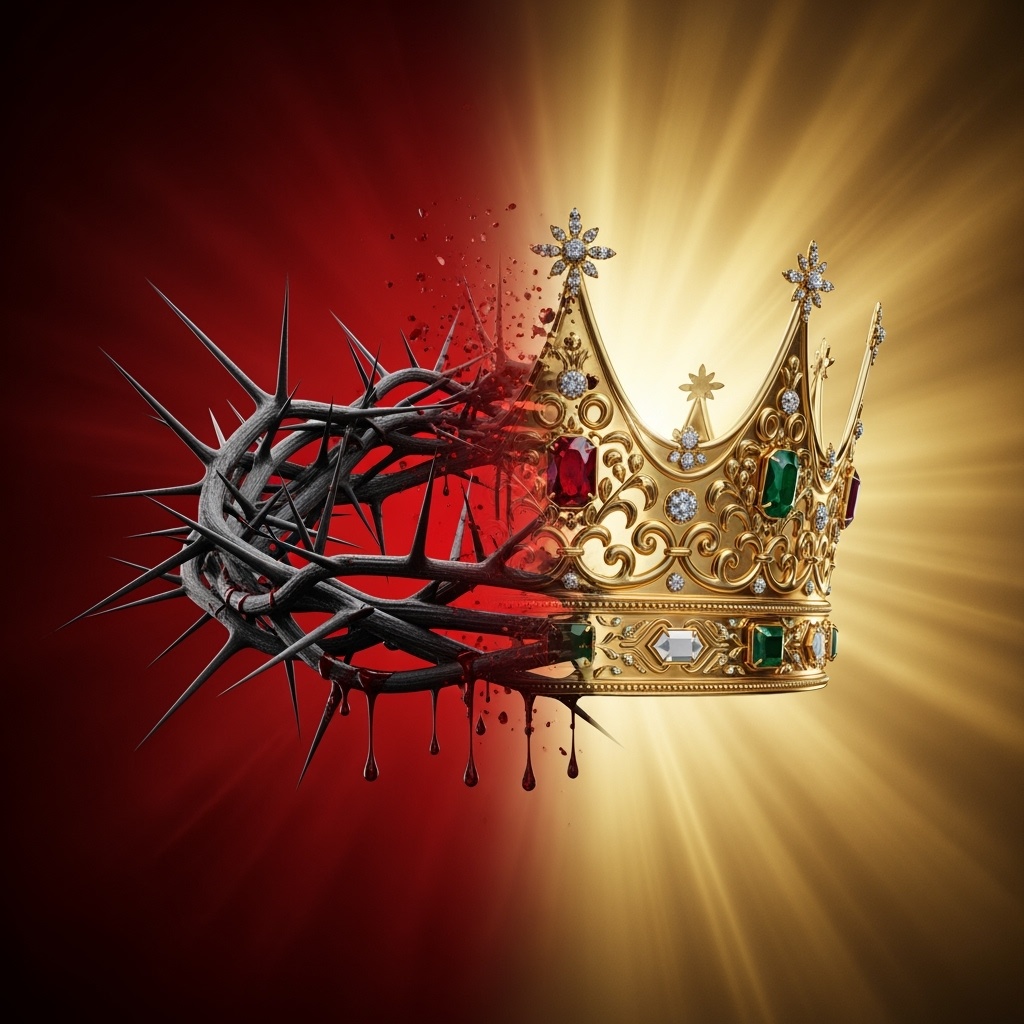
The Servant is now the Sovereign. The Lamb is now the Lion. The crown of thorns has become the crown of glory.

One day, His invisible reign will be visible to every eye:

“At the name of Jesus, every knee should bow… and every tongue confess that Jesus Christ is Lord” (Philippians 2:10–11).

Looking Ahead

The King who now rules in grace will return in glory. And when He does, there will be no mocking robe or thorny crown—only majesty, power, and justice.

Stay tuned for Act 7: Justice Wears a Robe – His Examination, where Christ returns not as a Servant but as a Judge, clothed in justice and authority.

Discussion Questions

  1. How does seeing Jesus’ ascension as a coronation change the way you understand His kingship today?
  2. Why do you think people in Jesus’ day struggled to accept Him as King? In what ways do people today still struggle with that?
  3. What does it mean to say, “Wherever the King goes, the Kingdom follows”?

TADB 142: The Gospel Act 5 – Humanity Enters Heaven

Jesus didn’t shed His humanity at the clouds. He carried it into heaven—and that changes everything

Picture this: Jesus and His disciples are walking up the Mount of Olives. Only weeks before, a nearby garden had been the place of betrayal, soldiers, and fear. But now—no soldiers, no crowds, no traitor. Just a small band of men transformed by the resurrection.

For forty days, Jesus had been teaching them. He opened their eyes to see how Moses, the prophets, and the Psalms all pointed to Him. The story finally made sense.

And now, He gave them their mission: “Make disciples of all nations.” But before they could begin, He gave them one more gift—the promise of power.


The Ascension Moment

As He blessed them, Jesus began to rise into the clouds. The disciples stood in stunned silence until two angels appeared:

“Why do you stand looking into heaven? This same Jesus will return in the same way you saw Him go.” (Acts 1:11)

Instead of sadness, the disciples were filled with joy. Why? Because this wasn’t about Jesus leaving. It was about Jesus arriving.


Humanity in Heaven

The Son of God’s return to heaven wasn’t surprising. What astonished heaven was this: He returned still wearing our humanity.

As Gerrit Dawson wrote, “Humanity has now entered heaven for the first time…the incarnation has no expiration date.”

Jesus still bears the scars. He is still the God-Man. Which means humanity has a place in heaven.

Tim Keller put it simply: “The ascension means that a human being rules the universe.”


What It Means for Us

Because of the ascension:

  • We are not alone—Jesus intercedes for us as our High Priest.
  • We have direct access to God—no other mediator is needed.
  • We can pray boldly in Jesus’ name, standing in His authority.
  • The Spirit now dwells within us permanently.

Following Jesus isn’t about trying harder. It’s about leaning into the Spirit’s strength, depending on His presence, and living in His power.

The disciples finally understood:

  • The incarnation is eternal.
  • Christ’s sacrifice is accepted.
  • Reconciliation is available.
  • The Spirit is personal.
  • Intercession is direct.

So What Now?

The ascension means heaven is open, our prayers are heard, and our future is secure. We have a representative in heaven—one who carries our humanity before the throne of God.

And this story isn’t finished. The angels promised: “This same Jesus will return in the same way.”

Until then, our mission is clear: start where we are, go in every direction, and make disciples.

Christ is risen. Christ is ascended. And one day, Christ will return.

…And it gets even better.

For Discussion

  1. Why do you think the ascension of Jesus is often overlooked compared to the resurrection?
  2. What does it mean for you personally that “humanity has now entered heaven”?
  3. How does Jesus’ role as our High Priest change the way you think about prayer
  4. The disciples moved from fear to joy because of the ascension. What shift does God want to bring in your perspective?
  5. How can you live more boldly in light of the truth that Christ is both risen and ascended?

TADB 141: The Gospel, Act 4 The Sunrise No One Expected

On the third day, no one expected an empty tomb. Yet the resurrection of Jesus changed everything—turning fear into hope, defeat into victory, and doubt into faith.

It was the third day after the crucifixion, and Jerusalem was still heavy with sorrow. While it was still dark, something happened no one expected. The ground shook like an earthquake. Guards who had been stationed to prevent grave robbery were knocked to the ground—more by terror than by force. Then, without warning, two angelic figures in dazzling white rolled the massive stone from the entrance as if it were nothing.

The guards panicked. They scrambled up and fled, leaving the tomb unguarded and wide open. Heaven knew what was unfolding. Earth did not.


The Women Arrive

As the first light of dawn crept into the garden, a small group of women came with spices to complete the burial rituals for their beloved teacher. On the way, they wondered aloud, “Who will roll the stone away for us?”

But when they arrived, the stone was already moved. The guards were gone. The tomb stood open.

Cautiously, they stooped and stepped inside. Instead of Jesus’ body, they were greeted by a radiant messenger who spoke words that would echo through history:

“Don’t be afraid. I know you are looking for Jesus, who was crucified. He isn’t here! He has risen from the dead, just as he said would happen.” (Matthew 28:5–6)

Stunned, the women rushed out, struggling to make sense of it all. Could this be true? Who would believe us? We’re just women—and honestly, we can hardly believe it ourselves.

And then, in the middle of their confusion, Jesus himself appeared. Alive. Standing with them.


An Upper Room in Hiding

But while the women hurried to tell the others, fear still cast a heavy shadow over the men who had once walked so boldly beside him.  The men who once swore loyalty now sat in fear, worried that soldiers would arrest them next. When the women finally found them and shared the news—the angels, the empty tomb, and that they had seen Jesus alive—the response was… doubt.

Surely, they thought, the women were mistaken. Maybe they went to the wrong tomb. Perhaps they were just confused. Not one of them seemed to remember Jesus’ own words about rising on the third day.

But Peter and John had to see for themselves. They ran to the tomb. The stone was gone, the body missing, the grave clothes left behind. What had happened? Stolen—or risen?


Evening Surprise

Later that evening, the disciples gathered behind locked doors, trying to make sense of it all. Then, suddenly, Jesus stood among them.

“Peace be with you.”

It was him. The face, the eyes, the voice. Not a ghost, not a vision—but the risen Lord himself. One by one, he embraced them. Hope returned to hearts that had been crushed only days before.


Forty Amazing Days

Over the next weeks, everything changed. Thomas, the doubter, touched Jesus’ scars and believed. More than 500 people saw him alive. For forty days, he appeared again and again, teaching his disciples and proving beyond question that he had conquered death.

The resurrection was more than just a miracle—it was the turning point of history. Through it, Jesus’ power was revealed, his divinity confirmed, and his kingdom inaugurated. Death was defeated. Eternal life was secured.

As Paul would later write, what seemed like foolishness to the world became the very hope of glory.


Why It Matters

No one expected an empty tomb. No one expected a risen Messiah. And often, we don’t either. We may believe in principle, yet still live as if death has the final word.  But that’s the beauty of the gospel—God’s power always exceeds human expectations.

What began in the darkness of a garden tomb broke into the light of resurrection morning. That same power still shakes the world today. Some scoff. Some wonder. But millions believe.

And for those who do, the words of Jesus ring truer than ever:

“I am the resurrection and the life. Anyone who believes in me will live, even after dying.”

✨ This moment is the foundation of our faith, the heartbeat of the good news we carry. The curtain rises on hope, on victory, on life that death can never destroy.


For Discussion

  1. Why do you think none of Jesus’ followers expected the resurrection—even though he had predicted it?
  2. How do the women’s reactions at the tomb encourage you in your own doubts and fears?
  3. Which part of the resurrection story (the earthquake, the angel, the empty tomb, the appearances) most stirs your faith? Why?
  4. How does the resurrection speak into your present fears, struggles, or uncertainties?
  5. What does Jesus’ statement—“I am the resurrection and the life”—mean for how you view both death and everyday life?
  6. If you had been one of the disciples hiding in the upper room, how do you think you would have responded when Jesus suddenly appeared?
  7. The resurrection is described as both “foolishness” to some and “the hope of glory” to others (1 Corinthians 1:18, Colossians 1:27). Which of those two responses do you most often encounter in conversations today?

TADB 140: The Gospel- Perfection Gains a Scar

On Calvary, justice and love collided. Wrath was satisfied. Mercy was unleashed. The scar of the cross changed everything.

Picture the scene.
The crowds are buzzing with excitement as Jesus rides into Jerusalem on a borrowed donkey. Palm branches wave. Shouts fill the air:
“Blessings on the King who comes in the name of the Lord!”

To them, this Rabbi might just be the one to free them from Roman occupation.
But in a matter of days, the same voices will cry out, “Crucify Him!”

The Crucifixion – More Than a Tragedy

On the world stage, it looked like just another execution. Rome thought it was shutting down a potential uprising. The Jewish leaders thought they were protecting their own influence. Most of the world didn’t even notice—just another obscure rabbi silenced.

But heaven saw it differently. This was no ordinary death.

The accusations shifted depending on the audience:

  • To the religious leaders, Jesus was guilty of blasphemy.
  • To Pilate, He was a political threat.
  • To the soldiers, He was just another criminal to be disposed of.

So they beat Him. Mocked Him. Nailed Him to a wooden cross under the blazing sun. To them, it was business as usual. To heaven, it was the turning point of history.

Something Different About This Death

What stood out wasn’t just the brutality, but the man Himself.

  • He prayed for forgiveness instead of revenge.
  • He cried out to God as His Father.
  • He willingly gave up His life—it wasn’t taken from Him.

And then, in the middle of the day, the sky went dark. Creation itself seemed unable to watch.

His followers, crushed by grief, buried Him quickly before Sabbath began. To them, it felt like the end of everything. Their hope, their dream, their future—sealed in a borrowed tomb.

The Deeper Meaning

Years later, Paul would write:
“But God demonstrates His own love toward us, in that while we were yet sinners, Christ died for us” (Romans 5:8).

This wasn’t just a martyr’s death. It was substitution.
The perfect Lamb of God bearing the sin of the world.

The scar will remain forever.

At the cross, God’s justice and God’s love met in one brilliant, painful, glorious act of grace. Sin was paid for. Wrath was satisfied. Mercy was unleashed. The doorway to God’s kingdom swung wide open.

And no one saw it coming. Maybe the prophet Isaiah did -vaguely:

“All of us like sheep have gone astray, each of us has turned to his own way; but the LORD has caused the iniquity of us all to fall on Him” (Isaiah 53:6).

Certainly not Satan.

“No, the wisdom we speak of is the mystery of God—his plan that was previously hidden, even though he made it for our ultimate glory before the world began. But the rulers of this world have not understood it; if they had, they would not have crucified our glorious Lord” (1 Corinthians 2:7-8).

The Lamb of God

One day, John the Baptist saw Him walking by and declared:

“Look! The Lamb of God, who takes away the sin of the world!”

From the beginning, the pattern was clear—where there was sin, there had to be a substitute. A spotless lamb to take the place of the guilty.

Jesus was that Lamb. The second Adam who would not fail where the first one had. He lived in perfect obedience, not just for Himself but for us. He came not only to walk beside humanity but to stand in our place.

A Soldier’s Perspective

I sometimes imagine the Roman centurion telling his wife about that day:

“I’ve overseen plenty of crucifixions. Too many to count.
But this man—He was different.
He didn’t beg. Didn’t curse. Didn’t fight.
He looked at us as if we were the ones who needed mercy.
And then He asked His God to forgive us.
Forgive me.

And when He died, it wasn’t in defeat.
It was like a cry of victory.
The ground shook. The sky darkened.
And in that moment, I knew—
Surely this man was the Son of God.”

It’s Friday…

From the outside, it looked like failure. A dead rabbi. A sealed tomb. Disappointed disciples.

But God’s plan was never derailed.
The scar of the cross was not the end—it was the beginning.

It’s Friday….But Sunday’s a comin.

Discussion Questions

  1. Why do you think the crowd shifted so quickly from celebrating Jesus to demanding His crucifixion?
  2. What stands out to you most about the way Jesus faced His death?
  3. How does the cross show both God’s justice and His love?
  4. What do you imagine it felt like to be the centurion that day?
  5. In what ways does the phrase “It’s Friday, but Sunday’s coming” encourage you in your own struggles?

TADB 139: The Gospel Act 2-Deity Walks in the Dust

Jesus walked in the dust with humility, declaring God’s kingdom and revealing Himself as the Lamb of God. Discover Act 2 of the divine drama.

The stage grew quiet. The curtain had dropped—but not for long. Heaven leaned in. Hell grew cautious. And then, just as suddenly, the drama continued.

For thirty years, the Creator of the universe lived in obscurity. No spotlight. No fanfare. Just Jesus of Nazareth—learning the carpenter’s trade, sweating under the sun, collecting splinters in His hands and calluses on His feet. God Himself was walking in the dust, and few noticed.

But everything was about to change.

The Messiah Has Come

Christ—the Greek word for Messiah—wasn’t Jesus’ last name. It was a title, one He lived into through His words and actions. Everything about Him—His teaching, His miracles, His compassion—pointed to the claim that He was the long-awaited Messiah.

For centuries, the Jewish people had been waiting for this figure. The prophets spoke of His coming. Families whispered with hope: “Maybe the Messiah will arrive in our lifetime.” They pictured a deliverer like King David (Psalm 2)—a warrior-king who would overthrow their oppressors, free them from slavery, and put Israel back on the map as a global power.

So when John the Baptist burst onto the scene, people couldn’t help but ask: “Are you the one?” John was quick to set the record straight: “I’m not the Light—I’ve just come to introduce Him.”

Not long after, Andrew met Jesus. Excited, he ran to his brother Peter and said, “We’ve found the Messiah!” And in a quiet conversation with a Samaritan woman in Sychar, Jesus didn’t leave her guessing. When she mentioned the coming Messiah, He simply replied, “I am he.”

The question was no longer if the Messiah had come. The real question was: what kind of Messiah would He be?

The Servant Steps Forward

The prophet Isaiah had described Him as the Suffering Servant—not a warrior king or political ruler, but a servant.

He arrived without armies or parades. He carried no sword, wore no crown. Instead, He came in humility:

“For even the Son of Man did not come to be served, but to serve, and to give His life as a ransom for many.” — Mark 10:45

Paul later marveled at this reality:

“Though he was in the form of God, he did not consider equality with God something to cling to. Instead, he emptied himself, taking the form of a servant…” — Philippians 2:6–7

The Creator of galaxies chose a carpenter’s bench. Omnipotence grew weary and sweated beneath the sun. Grace wore sandals.

The Kingdom Among Us

“The kingdom of God is near,” Jesus announced (Mark 1:15). And wherever He went, the kingdom left footprints.

It wasn’t tied to Rome or borders or thrones. It was deeper—an eternal reality, invisible to unbelief but unmistakable to faith. His words unsettled the powerful, comforted the broken, and puzzled nearly everyone else.

He healed the sick. He welcomed the forgotten. He set the oppressed free. Demons fled at His command. Blind eyes opened. The dead rose. And the crowds whispered, “Could this be the Messiah?”

But He wasn’t the Messiah they expected. The long-awaited King came as a servant, revealing the very nature of God (Hebrews 1:1–2). When Thomas asked to see the Father, Jesus answered, “The one who has seen Me has seen the Father” (John 14:9).

The Rabbi of a New Way

Jesus not only announced the kingdom—He showed what kingdom life looks like.

On a hillside, He taught a way of living that turned human instincts upside down: the first will be last, the greatest will serve, forgiveness undeserved. His followers were to be salt and light, even when persecuted.

As Rabbi, He modeled and taught these values. His invitation was simple yet demanding: Follow Me. To walk with Him was to learn a whole new way of being human. No wonder His followers were called people of “The Way.”

Perfection in the Dust

For thirty-three years, Jesus lived in perfect obedience to His Father. Where the first Adam failed, the second Adam prevailed. Every step, every word, every choice was surrendered to His Father’s will.

He declared, “I can do nothing by myself; I only do what I see the Father doing.” And in Gethsemane, sweating drops of blood, He prayed: “Not My will, but Yours be done.”

One thief on a nearby cross said it best: “We are punished justly… but this man has done nothing wrong.” His only “crime” was being exactly who He claimed to be—the perfect Son of God.

Imagine it: The Creator of galaxies walking dusty roads. The eternal King choosing humility. Perfection enduring a sham trial.

Curtain Falls

Act 2 closes not with a crown but with a conviction. Every step in the dust was leading to the cross—where the Servant would be revealed as the Savior.

For Discussion

  1. What strikes you most about the humility of Jesus in His early life and ministry?
  2. Why do you think people had such mixed reactions to Jesus’ message about the kingdom of God?
  3. How does seeing Jesus as both Servant and King shape your understanding of discipleship today?
  4. John the Baptist called Jesus “the Lamb of God.” What does this reveal about His mission?
  5. How do you see “kingdom footprints” in your own life today?

TADB 138: The Gospel – Eternity Takes a Breath

Discover the Incarnation as the first kairos moment in the Gospel story—when eternity entered time and the Creator became part of His creation.

Time is one of the four dimensions of our physical world—three of space and one of time. Unlike spatial dimensions, time moves in only one direction: forward. This unidirectional flow gives time a distinct role in shaping our experience of reality. In science fiction, we may see time moving backward or being manipulated, but in the real world, time marches forward without pause or rewind.

Religions have wrestled with the nature of time for centuries. Many Eastern religions see time as cyclical, repeating endlessly in a loop.  Judaism and Christianity see time as linear, moving toward a definite conclusion—a final day when God sets everything right.

Even the ancient Greeks had two words for time:

•  Kronos – measurable time, the ticking of the clock.

•  Kairos – a meaningful, opportune moment.

Where kronos is quantitative, kairos is qualitative. A kairos moment is when time seems to stop—when something significant happens that leaves a mark far deeper than minutes or hours.

I experienced such a moment years ago, sitting with my wife on a quiet beach in Hawaii at sunset as we celebrated our 25th wedding anniversary. The clock may have ticked on, but time, for us, stood still. That moment didn’t just happen in time—it transcended it.

Kairos in the Life of Jesus

In the life of Jesus, recorded in the four Gospels, we see approximately 30 years of kronos time. Yet within that span are seven defining kairos moments—unequal in duration but equal in spiritual significance. These moments, I believe, form the heart of the Gospel. Think of them not just as scenes in a biography but as Acts in a divine drama: The Gospel of the Risen King.

The Gospels weren’t written to be reduced to a single verse. They are full, rich portraits of Jesus. Matthew wrote 28 chapters, Mark 16, Luke 24, and John 21—all so we wouldn’t forget or distort the story.

Within their pages, we find seven defining kairos moments—each essential to understanding who Jesus is and what He came to do:

Prelude

  1. Incarnation
  2. Declaration
  3. Crucifixion
  4. Resurrection
  5. Ascension
  6. Coronation
  7. Examination

Each moment is critical.  Take one away, and the picture is incomplete. Put them together, and you see the full “in Him” we are called to believe (John 3:16).  Together, they form the amazing epic cosmic story we are invited into.

Act 1:  The Incarnation– Eternity Takes a Breath

It began quietly, not with thunder or spectacle, but with a silent breath.

The curtain of eternity lifted in a backwater village called Bethlehem. A teenage girl — no royalty, no riches — cradled a newborn, her arms trembling with wonder. Her name was Mary. Awed, confused, humbled — and yet, somehow, willing. She had agreed to play her part in the greatest story the world would ever know, though she could scarcely comprehend it.

This was no ordinary child. This was the eternal Son stepping into time — kairos erupting into kronos. In a world that counts moments in hours and years, this moment defied counting. Time didn’t just pass; it stood still.

Only a handful of witnesses were present at the start. A group of shepherds stumbled into the scene, still smelling of sheep and startled by angelic choirs. A band of scientists from the East, following a strange star, arrived later with questions and gifts. And somewhere in a palace in Jerusalem, a paranoid king began to feel his throne tremble.

But the real audience, invisible to earthly eyes, was heavenly. Angels watched in hushed awe as the Creator entered creation. Eternity became an embryo. Glory hid in shadows. Perfection grew vulnerable. Infinity slipped quietly into the fragile frame of a baby, wrapped in rags, crying in the night.

Eternity Enters Time

John would later write, “The Word became flesh and dwelt among us, and we saw His glory…” And Paul would explain, “In Christ lives all the fullness of God in a human body.” But in that moment, it was simply a mother watching her son breathe for the first time, and perhaps whispering his name.

Think about that for a moment: eternity entered time. The Creator became part of His creation. Infinity squeezed into an infant.

Jesus. A common name, really: the Hebrew Yeshua (salvation). Yet in that name was the mystery of divine intention. This child was not beginning his life; he was entering ours.

And he knew it. Years later, he would tell his followers, “I came from the Father and have come into the world; I am leaving the world again and going to the Father.” He spoke with the confidence of one who remembered eternity.

The paradox remained, and still remains: how could he be fully God and fully man? The early church, wrestling with this holy tension, declared him one person with two natures — indivisible, unconfused, inseparable.

As the first Act draws to a close, the star fades. The visitors slip away. Herod lashes out in fear. And under cover of night, Mary and Joseph flee with the child, crossing a harsh desert to Egypt. God, once enthroned in heaven, now rides silently on a donkey, a refugee in a foreign land.

The King has come

But not like any king the world expected.

What’s Next?

The Incarnation is just the beginning. Six more kairos moments follow—each one pulling back the curtain a little more on who Jesus is and what He came to do. Together, they form the heart of the Gospel: not just good news, but the best news the world has ever heard.

For Discussion

1. How can we train ourselves to notice and embrace kairos moments in our walk with Christ?

    2. Kronos vs. Kairos.  Can you recall a kairos moment in your own life when time seemed to “stand still”?

    3. What strikes you most about the way Jesus entered the world—quietly, vulnerably, and unexpectedly?

    4. How does the Incarnation shape your understanding of God’s closeness and empathy with humanity?

    5. Why do you think God chose shepherds, magi, and even hostile King Herod as part of the Incarnation story?

    TADB 136 The Gospel’s Creative Power

    The gospel is God’s dynamite power—creating new life, transforming us, and securing our place in His kingdom forever.

    Nitroglycerin, the precursor to dynamite, is extremely sensitive to shock, heat, and pressure, making it dangerous to work with. Thanks to Alfred Nobel, a more stable and solid form of nitroglycerin was developed by combining it with diatomaceous earth. In this form, it could be shaped into rods for safe transport and use. Nobel called his powerful new material dynamite.

    From Dynamite to Dynamis

    The word dynamite comes from the Greek word dynamis, meaning power. Scripture uses dynamis to describe God’s creative and redeeming power.

    Paul captures this when he writes:

    “I am not ashamed of this Good News about Christ. It is the power of God at work, saving everyone who believes—the Jew first and also the Gentile” (Romans 1:16, NLT).

    The gospel is not merely advice, encouragement, or philosophy—it is God’s power unleashed.

    Nobel also invented blasting caps, small devices that released dynamite’s explosive force. In the same way, the gospel contains God’s power within it, but preaching is the “blasting cap” that releases it.

    Paul put it this way:

    “When I first came to you… I decided to forget everything except Jesus Christ, the one who was crucified. I came in weakness—timid and trembling… I relied only on the power of the Holy Spirit. I did this so you would trust not in human wisdom but in the power of God” (1 Corinthians 2:1–5).

    We don’t give the gospel its power. We simply proclaim it, and God does the work.

    The Scope of Gospel Power

    God’s power is far greater than we often realize. Too often we reduce the gospel’s power to justification—our sins forgiven. But the gospel accomplishes so much more.

    Paul highlights this in Ephesians and Colossians, where he contrasts our old condition (“you once were…”) with our new reality (“but now you are…”). The gospel not only gives us a new identity but also begins an ongoing transformation—what theologians call sanctification.

    Power in Action

    Here are just a few ways the gospel’s power is at work in us:

    • Transferred from Darkness to Light (Col. 1:13)
      • New citizenship (Col. 2:19)
      • New destiny—life in God’s kingdom (John 3:2)
    • Adopted into God’s Family (John 1:12)
      • Reborn by the Spirit (John 3:3)
      • A new inheritance (1 Peter 1:4–5; Rom. 8:17)
      • A new name written in the Book of Life (Rev. 21:27; Phil. 4:3; Luke 10:20)
    • Indwelt by the Holy Spirit (1 Cor. 3:16)
      • Sealed by the Spirit (Eph. 1:13)
      • Guided into truth with the mind of Christ (John 16:13; 1 Cor. 2:16)
    • Freed from Sin’s Rule (Rom. 6:6–7, 17, 22)
      • The old self crucified
      • Chains of slavery broken
    • Reconciled to God (2 Cor. 5:19)
      • Our unpayable debt canceled, nailed to the cross
      • Declared righteous in Christ

    Like the birth of a child, new birth in Christ is a miracle. A life that did not exist before now exists.

    Secure in Christ

    This raises the question: Can we lose this new life? Could it be revoked, stolen, or returned like a borrowed book?

    Think about what that would mean. Our sins would need to be recollected, our debt rewritten, our name erased from the Book of Life, our citizenship revoked, our adoption undone, and our new birth terminated.

    Scripture assures us this will never happen (Phil. 1:6; John 10:28–29; Rom. 8:29–30). Once God has unleashed the gospel’s power in us, it cannot be undone.

    For those who seem to walk away from the faith, only two possibilities remain: either they never truly were God’s child, or they still are, despite their struggle. Our confidence rests not in ourselves but in the gospel’s power to both create and sustain.

    As CeCe Winans sings in her 2024 song:

    “It’s too late to stop this miracle. It’s too late.”

    Conclusion: Living in Gospel Power

    The same power that spoke creation into existence now gives us new birth and sustains us as children of God.

    The gospel is not just something we believe—it is something we experience. It is power. It is life. And it is unshakable.

    For Discussion

    1. Paul describes the gospel as dynamis (power). How does this change the way you think about the gospel message?
    2. Which aspect of “Power in Action” stood out most to you (citizenship, adoption, freedom, reconciliation)? Why?
    3. Why is it important to see the gospel as more than forgiveness of sins?
    4. How does the security of the gospel encourage you when you face doubts about your salvation?

    TADB 135: The Holy Spirit and the Trinity:  Unlocking the Power of the Gospel

    Discover how the Trinity—Father, Son, and Holy Spirit—reveals and empowers the gospel, from creation to new creation.

    Although the word Trinity never appears in Scripture, the biblical story points to it again and again. From the very beginning, the first name for God in Genesis 1:1 is Elohim—a plural noun used in a singular sense when referring to Israel’s God. Some scholars suggest this plurality reflects God’s abundance in attributes and sovereignty. Others see in it an early hint of His triune nature.

    This plurality becomes more explicit in the creation of humanity:

    “Then God said, ‘Let us make mankind in our image, in our likeness’” (Genesis 1:26).

    Scripture identifies both the Spirit and the Son as present at creation. “The Spirit of God was hovering over the surface of the waters” (Genesis 1:2). Colossians 1:15–16 declares that Christ is the creator of all things. Together, Father, Son, and Spirit are the Elohim of creation—the singular plural God.

    The Spirit in the Old Testament

    The Spirit of God appears throughout the Old Testament as a powerful influence in people’s lives, though often temporarily. Saul received the Spirit when he became king, but the Spirit departed when he disobeyed (1 Samuel 16:14). David received the Spirit when Samuel anointed him as king. Again and again, the Spirit’s presence was real but fleeting, preparing the way for something greater to come.

    The Trinity in the Gospel

    The New Testament makes explicit what the Old Testament hinted: the gospel itself is Trinitarian. Each Person of the Godhead is uniquely involved:

    The Father

    • Author (Ephesians 3:8–9)
    • Architect (Romans 1:1–2)

    The Son

    • Messenger (John 1:4, 17–18)
    • Message (Romans 1:3, 9; Galatians 1:16)

    The Holy Spirit

    • Power (Romans 1:4; Acts 1:8)
    • Proof (Romans 8:9, 14, 16)

    The Spirit in the Life of Christ

    God the Spirit is revealed throughout the ministry of God the Son. The Spirit was:

    • The agent of Christ’s conception (Luke 1:35).
    • Present at His baptism with the Father (Matthew 3:16).
    • The One who led Him into the wilderness (Matthew 4:1).
    • The power behind His teaching, ministry, and healing (Luke 4:14, 18; Acts 10:38).
    • A central theme in His teaching, especially in the upper room (John 14, 16).
    • The power behind His resurrection (Romans 1:4; 8:11; 1 Peter 3:18).

    If the Spirit empowered Christ’s ministry, it should not surprise us that He empowers the gospel’s advance today.

    The Spirit: Power and Proof of the Gospel

    Power

    • Convicts the heart (John 14:26).
    • Brings about new birth (John 3:1–8).
    • Drives the expansion of the gospel (Acts 1:8).
    • Empowers the proclamation of Christ (1 Thessalonians 1:5; Romans 1:16).

    Proof
    As the gospel spread from Jerusalem to Judea, Samaria, and the nations (Acts 1:8), the Spirit confirmed its authenticity:

    • Jews at Pentecost (Acts 2).
    • Samaritans (Acts 8:14–17).
    • Gentiles like Cornelius (Acts 10; 15:7–8).

    At first, this proof came dramatically—through tongues and signs. But ultimately, Paul emphasizes that the true evidence of the gospel’s power is transformed lives (1 Thessalonians 1:5–10). The Thessalonians’ faith was visible in their perseverance under persecution, their imitation of Christ’s ways, their repentance from idols, and their eager anticipation of Christ’s return.

    Evidence of the Spirit Today

    That raises a vital question: What evidence marks authentic conversion now? Scripture points us to:

    • Spirit-led living: sensitivity to His voice through the Word (Romans 8:14).
    • Fruit of the Spirit: Christlike character (Galatians 5:22–23).
    • Allegiance: loyalty to God’s kingdom authority (Colossians 1:13).
    • Alignment: obedience to God’s will (1 John 2:3).
    • Witness of the Spirit: the inner assurance of belonging to Christ (Romans 8:16).

    The Gospel Reveals the Trinity

    Each Person of the Trinity is essential to the gospel. This is why the Apostles’ Creed so strongly emphasized the triune God—it confirmed that the gospel reveals the Trinity, and the Trinity reveals the gospel. To know the gospel is to know the Father who planned it, the Son who embodied it, and the Spirit who empowers and proves it.

    For Discussion

    1. In what ways did the Spirit’s work in the Old Testament differ from His role in the New Testament?

    2.  The article highlights the Spirit as both the power and the proof of the gospel. What biblical examples illustrate these roles?

    3.  How does the Spirit’s work of fruit (Galatians 5:22–23) differ from His work of gifts (Acts 2, 8, 10)? Which should we look to as lasting evidence of the gospel’s power?

    4.  What evidences of authentic conversion (Spirit-led living, fruit, allegiance, alignment, inner witness) do you find most encouraging—or most challenging—in your own walk with Christ?

    5.  How might understanding the Trinity more fully change the way you share the gospel with others?

    TADB 134: Who is Jesus? Begotten not Made

    If we misunderstand who Jesus is, we misrepresent the gospel. His divine nature is non-negotiable. The gospel stands or falls on the true identity of Christ. Do you know the difference between begotten and made?

    The gospel demands a radically new understanding of God — one that stretches beyond human categories. Scripture reveals God as a singular plural—Father, Son, and Holy Spirit. The word Trinity never appears in the Bible, yet the reality is unavoidable.

    With the incarnation, Jesus is presented as fully God and fully man, without compromising either. We may not fully understand this, but that doesn’t make it untrue.

    The first disciples struggled to replace their preconceived ideas of the Messiah with the reality Jesus revealed. Sixty years after Christ’s ascension, John writes his Gospel to present Jesus as the one and only incarnate God-man:

    “In the beginning was the Word, and the Word was with God, and the Word was God. He was in the beginning with God” (John 1:1–2).

    The Titles of Jesus in John 1

    In the first chapter of his Gospel, John gives ten titles for Jesus, each revealing His identity:

    • The Word (v. 1) – The eternal, divine communication of God.
    • God (v. 1) – Deity, not a lesser being.
    • Light (v. 9) – The true light entering the world.
    • Jesus Christ (v. 17) – The one in whom grace and truth come.
    • Lamb of God (v. 29) – The sacrifice who takes away sin.
    • Rabbi (v. 38) – Teacher and guide.
    • Messiah (v. 41) – God’s anointed deliverer.
    • Son of God (v. 49) – Unique divine Sonship.
    • King of Israel (v. 49) – The promised ruler.
    • Son of Man (v. 51) – A title Jesus favored, rooted in Daniel 7, pointing to His humanity and messianic role.

    The Jewish concept of Messiah did not include deity. But Jesus’ claim as Son of God clearly did.

    The Meaning of “Son of God” and “Only Begotten”

    The Bible uses son of God in several ways:

    • Humanity as God’s children (Luke 3:38).
    • Israel as God’s firstborn son (Exodus 4:22–23).
    • Angels as sons of God (Job 1:6; 38:7).

    When applied to Jesus, however, Son of God means God the Son—equal with the Father in nature and essence.

    In John 3:16, the term only begotten (or “one and only Son”) clarifies this. To “beget” is to produce one of the same kind. As C.S. Lewis illustrates in Mere Christianity:

    “A man begets human babies; a beaver begets little beavers; a bird begets eggs that turn into little birds. But when you make something, you make something of a different kind.”

    Humans were made in God’s image, but Jesus was begotten, sharing the same divine substance. He was not created. This is why some prefer the title God the Son—to mirror “God the Father” and “God the Spirit” and affirm the full Trinitarian reality.

    Why This Matters

    What people believe about Jesus is not a side issue. A recent Ligonier survey showed that 73% of those in our churches believe Jesus was created by God—a view that, in the fourth century, would have excluded someone from baptism or communion.

    This confusion has real consequences. Without the biblical Jesus, there is no biblical gospel.

    Case Study: The Hindu Student

    Suraj Nepali, a missionary to Hindu students, shares a revealing exchange:

    SN: “Do you believe in Jesus?”
    HS: “Yes, I do.”
    SN: “Do you believe He died for our sins?”
    HS: “Yes.”
    SN: “Do you believe He rose from the dead?”
    HS: “Yes.”

    The student affirms each point,; he sounds like a Christian—but still remains Hindu, believing in many gods. In his worldview, Jesus is simply the god for the forgiveness of sins.

    This mirrors a troubling reality in Western churches: people profess belief in “Jesus” but not the Jesus of Scripture. Without clarity on His true nature, discipleship and transformation falter.

    Conclusion

    If we misunderstand Jesus’ nature, we misrepresent the gospel. The New Testament demands that we see Him not merely as a moral teacher, a spiritual helper, or a created being, but as God the Son—eternal, begotten, not made.

    In the next article, we will explore how the gospel reveals the third Person of the Trinity: the Holy Spirit.

    Discussion Questions

    1. Why do you think the idea of the Trinity is hard for people to understand and accept?
    2. Of the ten titles John gives Jesus in chapter 1, which one speaks to you most—and why?
    3. What’s the difference between humans being “made in God’s image” and Jesus being “begotten of the Father”?
    4. Why is it dangerous to think of Jesus as a created being rather than eternal God the Son?
    5. How does the story of the Hindu student illustrate the importance of clarity about who Jesus really is?
    6. If someone asked you, “Who is Jesus?”—how would you explain it in light of John 1?