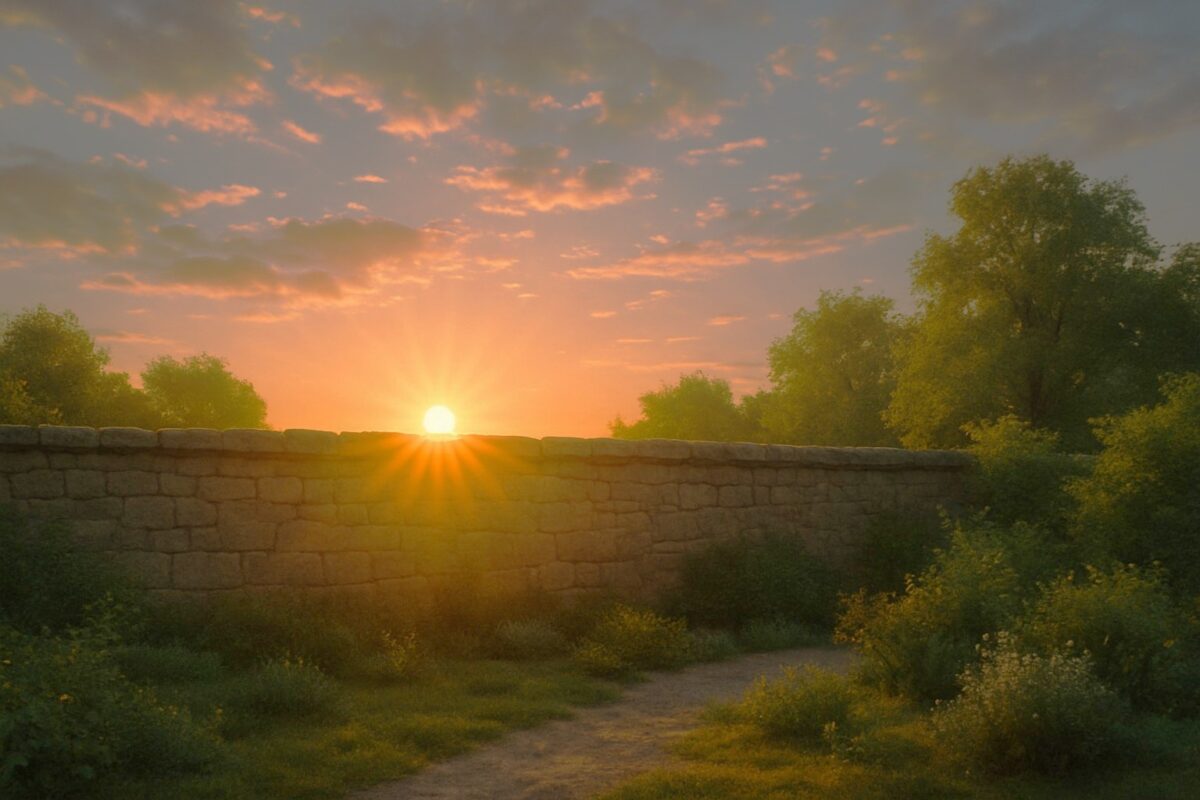
It was the third day after the crucifixion, and Jerusalem was still heavy with sorrow. While it was still dark, something happened no one expected. The ground shook like an earthquake. Guards who had been stationed to prevent grave robbery were knocked to the ground—more by terror than by force. Then, without warning, two angelic figures in dazzling white rolled the massive stone from the entrance as if it were nothing.
The guards panicked. They scrambled up and fled, leaving the tomb unguarded and wide open. Heaven knew what was unfolding. Earth did not.
The Women Arrive
As the first light of dawn crept into the garden, a small group of women came with spices to complete the burial rituals for their beloved teacher. On the way, they wondered aloud, “Who will roll the stone away for us?”
But when they arrived, the stone was already moved. The guards were gone. The tomb stood open.
Cautiously, they stooped and stepped inside. Instead of Jesus’ body, they were greeted by a radiant messenger who spoke words that would echo through history:
“Don’t be afraid. I know you are looking for Jesus, who was crucified. He isn’t here! He has risen from the dead, just as he said would happen.” (Matthew 28:5–6)
Stunned, the women rushed out, struggling to make sense of it all. Could this be true? Who would believe us? We’re just women—and honestly, we can hardly believe it ourselves.
And then, in the middle of their confusion, Jesus himself appeared. Alive. Standing with them.
An Upper Room in Hiding
But while the women hurried to tell the others, fear still cast a heavy shadow over the men who had once walked so boldly beside him. The men who once swore loyalty now sat in fear, worried that soldiers would arrest them next. When the women finally found them and shared the news—the angels, the empty tomb, and that they had seen Jesus alive—the response was… doubt.
Surely, they thought, the women were mistaken. Maybe they went to the wrong tomb. Perhaps they were just confused. Not one of them seemed to remember Jesus’ own words about rising on the third day.
But Peter and John had to see for themselves. They ran to the tomb. The stone was gone, the body missing, the grave clothes left behind. What had happened? Stolen—or risen?
Evening Surprise
Later that evening, the disciples gathered behind locked doors, trying to make sense of it all. Then, suddenly, Jesus stood among them.
“Peace be with you.”
It was him. The face, the eyes, the voice. Not a ghost, not a vision—but the risen Lord himself. One by one, he embraced them. Hope returned to hearts that had been crushed only days before.
Forty Amazing Days
Over the next weeks, everything changed. Thomas, the doubter, touched Jesus’ scars and believed. More than 500 people saw him alive. For forty days, he appeared again and again, teaching his disciples and proving beyond question that he had conquered death.
The resurrection was more than just a miracle—it was the turning point of history. Through it, Jesus’ power was revealed, his divinity confirmed, and his kingdom inaugurated. Death was defeated. Eternal life was secured.
As Paul would later write, what seemed like foolishness to the world became the very hope of glory.
Why It Matters
No one expected an empty tomb. No one expected a risen Messiah. And often, we don’t either. We may believe in principle, yet still live as if death has the final word. But that’s the beauty of the gospel—God’s power always exceeds human expectations.
What began in the darkness of a garden tomb broke into the light of resurrection morning. That same power still shakes the world today. Some scoff. Some wonder. But millions believe.
And for those who do, the words of Jesus ring truer than ever:
“I am the resurrection and the life. Anyone who believes in me will live, even after dying.”
✨ This moment is the foundation of our faith, the heartbeat of the good news we carry. The curtain rises on hope, on victory, on life that death can never destroy.
For Discussion
- Why do you think none of Jesus’ followers expected the resurrection—even though he had predicted it?
- How do the women’s reactions at the tomb encourage you in your own doubts and fears?
- Which part of the resurrection story (the earthquake, the angel, the empty tomb, the appearances) most stirs your faith? Why?
- How does the resurrection speak into your present fears, struggles, or uncertainties?
- What does Jesus’ statement—“I am the resurrection and the life”—mean for how you view both death and everyday life?
- If you had been one of the disciples hiding in the upper room, how do you think you would have responded when Jesus suddenly appeared?
- The resurrection is described as both “foolishness” to some and “the hope of glory” to others (1 Corinthians 1:18, Colossians 1:27). Which of those two responses do you most often encounter in conversations today?