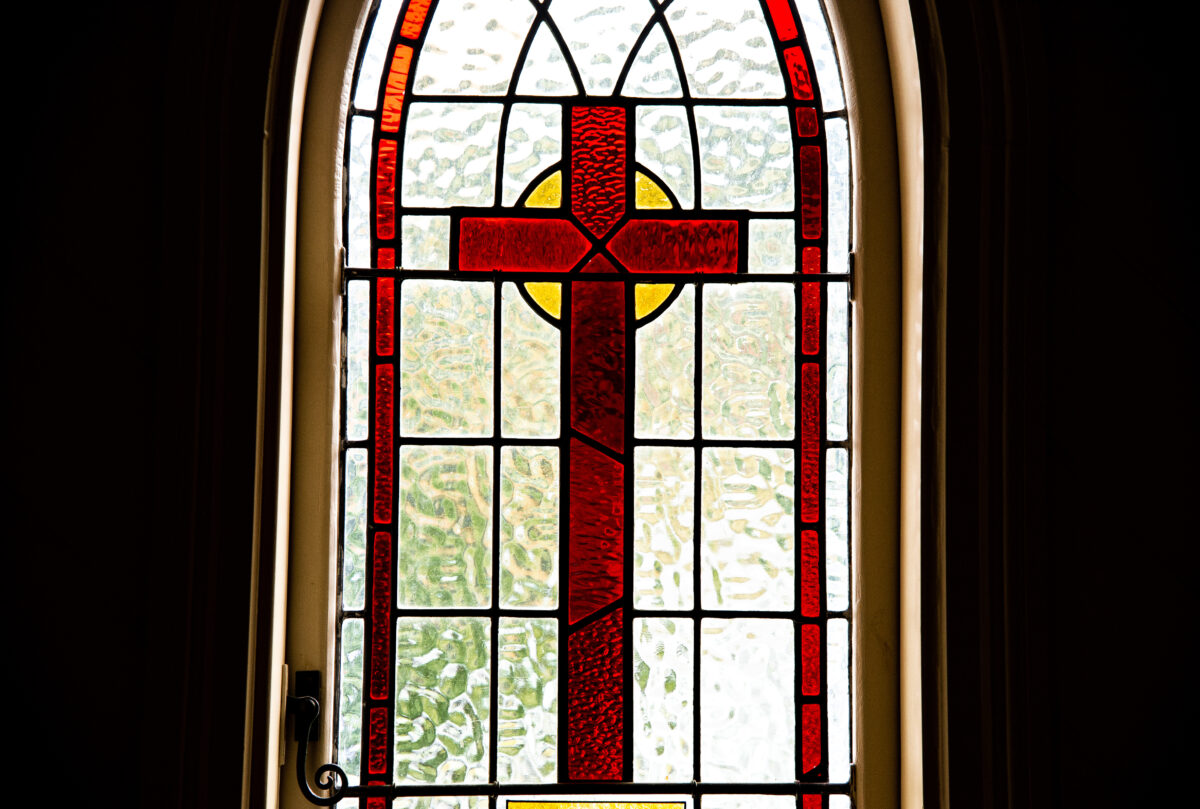
Many Christians treat the cross as the finish line of the gospel story. Biblically, it is the gateway into something new. Through the cross we don’t just receive forgiveness—we are invited into a new kingdom and a new relationship with a King.
In the previous blog, we explored the cross as a two-sided door. On one side we see Jesus the Savior, offering atonement, forgiveness, and reconciliation—what theologians call Penal Substitutionary Atonement (PSA). On the other side we see Jesus the King, displaying victory, authority, and power—Christus Victor. The work of the cross takes place both in the courtroom and on the battlefield.
In this blog, we look at the cross as a window. If the door shows us where we are going, the window shows us who we are following. Through the cross we see the character of the King who rules this kingdom.
The Destination: Kingdom Life
First, we need to clarify where this doorway leads.
In John 3, Nicodemus approaches Jesus with an unspoken question: Who are you, and what are you offering? Jesus’ response reveals that He is introducing something radically new.
Jesus describes this new reality in several interconnected ways:
- Saved — Jesus came to save (John 3:17). But saved from what? If our answer is only sin’s penalty, our understanding is too narrow. Salvation includes rescue from bondage, darkness, and spiritual death.
- Born again — Jesus offers new birth by the Spirit (John 3:3, 7–8), a miracle of transformation that creates a new person (2 Corinthians 5:17). This is not self-improvement; it is spiritual rebirth.
- Eternal life — Jesus defines eternal life as knowing the one true God and Jesus Christ whom He sent (John 17:3). Eternal life is not merely future duration—it is present relationship. It is not just about where we go when we die; it is about the life we begin living today.
- Kingdom transfer — Through the cross, Jesus brings us into God’s kingdom (John 3:3), transferring us from the domain of darkness into the kingdom of His Son (Colossians 1:13). Here Jesus reigns as Victor, having defeated sin’s power, darkness’ authority, and death’s tyranny.
The cross does not merely cancel guilt—it opens the door into kingdom life.
The Cross as a Window
The cross is not only a door we pass through; it is also a window we look through. It reveals the character of both the Savior and the King.
The writer of Hebrews says:
“He is the radiance of God’s glory and the exact representation of His nature” (Hebrews 1:3).
If Jesus perfectly reveals God, then the cross may be the clearest single picture of what God is like. When we ask what kind of King we are surrendering to, the answer is found at Calvary.
The Nature of the King Revealed at the Cross
Several themes converge at the cross, forming a unified portrait of the King.
1. Self-Giving Love
The cross does not merely illustrate love—it defines it.
“God demonstrates His own love toward us, in that while we were still sinners, Christ died for us” (Romans 5:8).
This love moves toward enemies, absorbs the cost of reconciliation, and acts even before repentance is shown. The King we serve rules through sacrificial love, not self-preservation.
2. Justice and Holiness
At the cross, God does not ignore evil.
“So that He would be just and the justifier of the one who has faith in Jesus” (Romans 3:26).
Sin is judged, not excused. Moral order is upheld, not dismissed. God’s holiness explains why the cross was necessary. Yet justice does not cancel mercy—both meet perfectly in Christ.
3. Grace and Mercy
Grace is not cheap kindness. It is unearned favor at infinite cost.
“By grace you have been saved…” (Ephesians 2:8).
At the cross, mercy flows through justice. The guilty are forgiven, restoration is offered, and gratitude becomes the fuel for obedience. The kingdom is not built on human effort but on divine generosity.
4. Humility and Servanthood
From incarnation to crucifixion, Jesus reveals that humility is not weakness—it is divine strength expressed through love.
Paul describes Christ as one who “emptied Himself” and took the form of a servant (Philippians 2:5–11). This was not a disguise. It was a revelation of God’s heart.
The King of the universe washes feet, carries a cross, and lays down His life. Kingdom leadership is not about domination; it is about self-giving service.
5. Authority and Redefined Power
Jesus was not forced onto the cross. He chose it.
“You would have no authority over Me unless it had been given to you from above” (John 19:11).
What appears as defeat becomes victory. What looks like weakness becomes triumph.
“Christ… the power of God” (1 Corinthians 1:24).
God’s power does not crush enemies by force—it defeats evil by transforming hearts and disarming darkness. The cross redefines everything we think we know about strength.
6. Faithfulness
The cross completes centuries of promise.
“This is My blood of the covenant” (Matthew 26:28).
God remains faithful to His covenant story, staying loyal even when His people fail. The cross declares: I will not abandon what I have promised.
The Invitation of the Cross
Step back and look through the window. Why would anyone fear surrendering to a King like this?
Yet many people accept forgiveness without surrender. We carry our “get-out-of-jail-free” card while quietly resisting Jesus’ leadership. The brilliance of the cross is that it reveals exactly what kind of ruler Jesus is and what kind of home He is inviting us into.
It is an invitation that not only removes guilt but also heals the distrust in our rebellious hearts. It does so by dismantling the ancient lie that God is not safe and therefore not worthy of our trust. However, when we see Jesus’ humility, justice, love, mercy, and faithfulness, our hearts can finally grasp that surrender is not a loss; it is a rescue with everything to gain.
Seeing the King is only the beginning. Every king creates a culture.
In the next post, we will explore how the cross does not simply reveal who Jesus is — it transforms how His followers live. It provides the pattern that shapes kingdom living. The cross creates a radically different kingdom culture marked by humility instead of dominance, sacrifice instead of self-protection, love instead of retaliation, and faithfulness instead of convenience.
The cross does not just save us from something. It trains us for something: life under the reign of a crucified King.
For Reflection
- Many Christians see the cross as the “finish line” of faith rather than the doorway to kingdom life. How have you personally experienced this tension? In what ways has your faith focused more on forgiveness than on daily kingdom living?
2. Jesus links being “born again,” “saved,” “eternal life,” and “the kingdom of God” as one reality. How does seeing eternal life as a present relationship rather than just a future goal change the way you live today?
3. The blog describes the cross as a “window” revealing the character of Jesus as King. Which aspect of Jesus’ character displayed at the cross (love, humility, justice, mercy, power, faithfulness) stands out most to you right now—and why?
4. The blog indicates that many people accept forgiveness but do not fully surrender to Jesus’ leadership. What does practical surrender to Jesus as King look like in daily life (relationships, money, time, conflict, obedience)? Where do you personally feel the greatest resistance?
5. The cross calls us not just to believe but to act. What is one specific step you can take this week to live more intentionally as a citizen of God’s kingdom instead of being a spiritual spectator?
But it’s not just the Cross that leads us into Kingdom Life, but Christ’s Cross, Resurrection, Ascension and the pouring out of His Holy Spirit that leads us into Kingdom Life.