TADB 160: When Death Took the Throne

Estimated reading time: 7 minutes

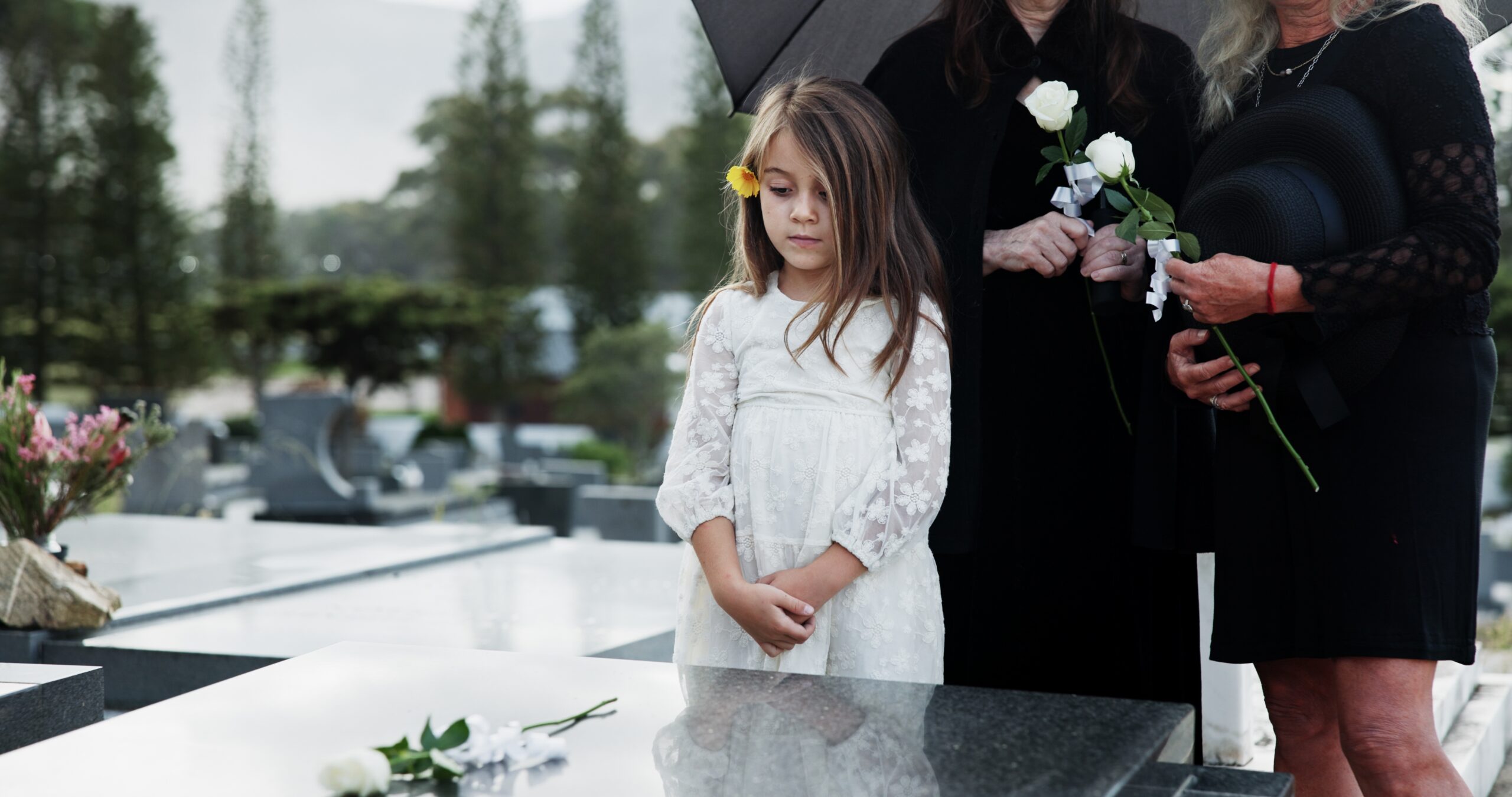
Every funeral or memorial service is a reminder that, while death may be unavoidable, it never seems natural. Even the loss of someone who has lived long and well carries its weight of sadness. And no matter how we describe it — no matter what gentle words we reach for — when someone we love dies, something deep within us insists that relationships were never meant to end.  So why do we feel that way?

There’s a line in Genesis that doesn’t get enough attention.

God tells Adam, before any of this goes wrong: “In the day that you eat from it you will surely die” (Genesis 2:17). Most of us read that as a warning about an event. But it was really a warning about a trajectory. Death wasn’t just something that would happen to Adam — it was something that would affect all of us after him.

And here’s what that death actually meant: separation from the Source of life itself. God wasn’t simply announcing a biological endpoint. He was saying, in effect, “If you reject My rule, you forfeit My life.” Because life — real life — only exists under His reign. What happened in the Garden wasn’t just a moral failure. It was a defection. A transfer of allegiance. A kingdom-level rebellion. And death was the inevitable consequence.

What unfolds from that moment is not just one kind of death, but a cascading reality that touches every dimension of human existence.

It Didn’t Stay in the Garden

What’s striking is how far death traveled from that single moment.

The instant they ate, something died that had nothing to do with their heartbeats. Their relationship with God — the intimacy, the openness, the unashamed communion — collapsed. They hid. That’s Paul’s point in Ephesians 2:1 when he says we’re all born dead. Not sick. Not wounded. Dead. Spiritually disconnected from the only Source that makes human life actually make sense.

And from that rupture, everything else unraveled.

Physically, they lost access to the Tree of Life. Mortality entered. Every funeral since has been a signpost pointing back to Eden — and forward to something worse if nothing changes.

Relationally, shame moved in and intimacy moved out. Self-protection replaced vulnerability. Blame replaced honesty. It took exactly one generation for murder to appear in the story. By the time of Noah, human community had become so comprehensively broken that God sent a flood just to keep the story from completely destroying itself.

Internally, the self fractured. Shame and fear became the default. We became strangers to ourselves—asking Who am I? Why am I here? without any framework that could answer.

Vocationally, even creation took the hit. Thorns. Toil. Romans 8 says the whole created order is groaning — subjected to futility, waiting for a liberation that hasn’t fully come yet.

And then there’s what Scripture calls the second death. The lake of fire. It’s not arbitrary judgment—it’s the final, unbroken continuation of separation from God— it’s the full maturation of what started in Genesis 3. It’s where the trajectory ends if nothing interrupts it. Death’s final word.

Six dimensions, but one death. Spiritual, physical, relational, psychological, vocational, eternal — they aren’t separate problems. They’re one catastrophic rupture playing out across every layer of human existence.

Death didn’t Just Happen — It Took the Throne

Here’s what makes this even more serious. Death didn’t remain a passive fate. It became a ruling power.

After the Fall, death began to reign. The body decays. The mind darkens. Relationships fracture. Creation groans. And behind it all, Scripture tells us, is an enemy who holds the power of death — leveraging it, weaponizing it, using the fear of it to keep people in slavery their entire lives.

In Adam, we didn’t just drift away from God. We became enemies. Complicit. Co-conspirators in a rebellion against the King of the universe. And that left us living under a domain that, left to itself, only ends one way.

Unless something — or Someone — interrupts it.

The King Steps In

This is where the gospel gets bigger than most of us have let it be.

“Since the children share in flesh and blood, He Himself likewise also partook of the same, so that through death He might destroy the one who has the power of death, that is, the devil, and free those who through fear of death were subject to slavery all their lives.” (Hebrews 2:14-15)

Jesus didn’t just come to erase a legal debt, as magnificent as that is. He came to destroy a ruling power. To invade the domain of death and break its reign from the inside. Theologians call this Christus Victor — Christ the Conqueror — and it’s not a peripheral idea. It’s central to what the gospel actually accomplishes.

Because if death touched every dimension of human existence, then the redemption Christ brings has to be equally comprehensive. And it is.

The spiritual death? Overcome. The Spirit brings the dead back to life — “the law of the Spirit of life in Christ Jesus has set you free from the law of sin and death” (Romans 8:2).

The relational rupture? Healed. We were enemies, and we’ve been reconciled. “You are no longer strangers and foreigners, but fellow citizens with the saints, and members of God’s household” (Ephesians 2:19).

The physical death? Answered by resurrection. Christ’s bodily resurrection isn’t a one-time miracle — it’s a prototype. “Since by a man death came, by a man also came the resurrection of the dead” (1 Corinthians 15:21). What happened to Him will happen to us.

The psychological fracture? The gospel gives us back the answers that death stole. A new identity. A new story. Who we are, why we’re here, where we’re going — all of it reoriented around the King we were always made to know.

The creational damage? Not permanent. The current creation will give way to a new heaven and earth where righteousness finally, fully dwells.

And the second death? Swallowed up in glorification. “He will transform these bodies of humble condition into the likeness of His glorious body” (Philippians 3:21). The image of God, fully restored. Death’s final word overwritten.

What This Should Do to Us

The King didn’t lower the standard to accommodate rebels. He met the standard Himself, at His own cost, so that enemies like us could be forgiven, restored — and one day reign with Him.

That’s not just good news. It means the trajectory you were born into does not have to be the one you finish. The reign of death can be broken—because the King has already stepped in.

For Reflection

  1. The blog describes the Fall as a “transfer of allegiance” rather than simply a moral failure. How does thinking of sin in kingdom terms — defection rather than just rule-breaking — change how you understand your own sin?
  2. The blog says we were all born asking Who am I? Why am I here? Where am I going? without any framework capable of answering those questions. Do you recognize that in yourself before faith, or in people around you now? What substitutes do people reach for?
  3. The blog describes death not just as a fate but as a reigning power with an enemy behind it. Does that feel like a real category to you, or does it feel abstract? How does it change your understanding of the Christian life if death is something that was actively ruling over you?
  4. The blog argues that reducing the gospel to guilt-removal and pardon misses its full grandeur. Have you experienced that reduction in your own faith background? What did you think the gospel primarily was before reading this?
  5. Each dimension of death has a corresponding redemptive answer. Which of those six answers — regeneration, reconciliation, resurrection, renewal of mind, new creation, glorification — feels most personally significant to you right now, and why.
  6. If death’s reach is as comprehensive as the article describes, what areas of your life might you still be living as though the gospel hasn’t fully reached them?

TADB 159: When “It’s Not Fair” meets the Gospel

There are a few things nobody has to teach a toddler.

“No.” “Mine.” And the classic — “It’s not fair.”

Kids start saying that last one around age 3 or 4. At that age, “fair” basically means “I got what I wanted.” But honestly, we never really grow out of it. As adults, we still think it, even when we’re too polished to say it out loud. Sometimes it sounds like frustration. Sometimes it’s genuine confusion about why the rules seem to have changed. And sometimes it’s just a quiet request: help me understand why this makes sense.

One of the biggest “it’s not fair” moments people have with Christianity is the claim that sin leads to death. Romans 6:23 puts it plainly — “The wages of sin is death.” Eternal judgment for what most people would consider minor moral slip-ups? That feels less like justice and more like overkill.

The Fairness Problem

Here’s where most people are coming from.

We grow up with a legal framework where punishment fits the crime. Infractions get fines. Misdemeanors get probation. Felonies get prison time. And the death penalty? That’s reserved for the worst of the worst — murder, treason, terrorism. Even then, it’s not automatic.

Most people don’t put themselves in that category. They’re not murderers or terrorists. They’re just… people. Decent people, mostly. They cut corners sometimes, lose their temper, tell white lies. To them, hearing that God’s verdict on sin is death feels like getting pulled over for a rolling stop and being handed an execution notice.

So is God being unreasonable? Or are we misreading something?

We Might Be Misdiagnosing the Problem

The usual answer churches give goes something like this: God is infinitely holy, so even the smallest sin is a massive offense in His eyes. We just don’t get it because we don’t understand how holy He is.

That’s not wrong — but it’s incomplete. It explains the severity of God’s reaction without really explaining what sin is in the first place. We’re treating the symptom and skipping the diagnosis.

Here’s a better question: what if death isn’t primarily a punishment God imposes from the outside — but a consequence built into the way the universe actually works? This doesn’t remove God’s role as Judge—it explains why His judgment is just.”

There’s a Law at Work Here

We don’t have transcripts of every conversation God had with Adam and Eve in the Garden. But from what Genesis does record — the cultural mandate, the care of creation, the one prohibition — it’s clear God was teaching them how His world works.

Imagine a conversation something like this:

Adam, I want you to understand how my world works so you can thrive in it. I’ve built laws into creation—things you can count on. Take gravity. You don’t have to understand it, but you do have to respect it. Ignore it, and you get hurt.

There’s a moral law like that too. See that tree? Don’t eat from it. You can choose your actions—but you can’t choose the outcomes. Break the law, and death follows.”

That’s not a threat. That’s how the universe is structured. The law of sin and death isn’t a rule God invented out of irritation — it’s woven into the fabric of creation. Walking away from the source of life means walking away from life itself. Paul picks this up in Romans 8 when he talks about the law of the Spirit of life in Christ Jesus — a new law that overcomes the old one. Death doesn’t get the final word. But first we have to understand what we’re dealing with.

A Wage, Not Just a Curse

The word Paul uses in Romans 6:23 is worth sitting with for a second. He doesn’t say death is sin’s punishment or sin’s curse. He says it’s sin’s wageopsōnion in Greek, which was specifically the word for a soldier’s pay. The ration allotment. What a worker earns and is owed.

That’s a precise choice. A curse feels like something pronounced over you from the outside — something that lands on you. A wage is something you earn. Paul is saying death isn’t an alien imposition from an angry God. It’s the just return on the work you’ve put in. You served sin; sin pays its workers. Every time.

This fits perfectly with what Paul is doing in Romans 6. The whole chapter is about slavery and lordship — you serve sin or you serve righteousness. There is no neutral. Wages belong in that framework. Death is sin’s payroll. Sin isn’t just a mistake—it’s a transfer of allegiance.

And that distinction actually clears God of the charge of being capricious. He’s not moody. He’s not vindictive. He’s not looking for reasons to punish you. The outcome of sin is death the same way the outcome of jumping off a cliff is falling. It’s built into the moral order of a universe He created.

Not Like the Other Gods

It’s worth noting that the “vindictive deity” picture has deep cultural roots. Roman religion operated on pax deorum—the peace of the gods. Keep the rituals going and stay in their good graces, and things go well. Slip up, and Jupiter might hurl lightning, Neptune stir a storm, or Mars hand you defeat.

The Roman gods were famously moody—punishing or overlooking offenses depending on their mood, not consistent principle.

The God of Scripture is nothing like that. His wrath isn’t a temperamental outburst—it’s the settled, consistent response of a righteous King to real rebellion. No unpredictability. No favoritism. His justice is structural, not emotional.

So What About God’s Wrath?

Here’s where people get tangled up. If God is love — and Scripture is clear that He is — how does wrath fit into that picture? Most of our experience with wrath involves someone losing control, saying things they regret, punishing out of proportion to the offense. That kind of wrath is ugly and unfair.

But God’s wrath isn’t emotional volatility. A.W. Tozer put it well in The Knowledge of the Holy — God’s wrath is His holy displeasure against sin, not an emotional reaction but a moral necessity. And it doesn’t contradict His love. Because He loves, He opposes what destroys. Because He is holy, He must judge what corrupts. Love and wrath aren’t opposites in God — they’re both expressions of the same consistent character.

The Bottom Line

The problem isn’t that God’s judgment is too harsh.

The problem is that we’ve been misreading sin. We’ve been treating it like a parking ticket when it’s actually something far more serious — a severing of relationship with the source of life itself. Once you see it that way, death isn’t an excessive penalty. It’s the inevitable outcome of rejecting the one who sustains your existence in a universe governed by moral law.

God isn’t the vindictive judge we imagined. He’s the Author of life — and He warned us exactly what would happen if we walked away.

The Expanding Shadow of Death

In the Garden, death entered the story—not as an arbitrary sentence, but as the inevitable result of rebellion against the Author of life.  But death did not remain confined to a single moment.

It spread:  through humanity, relationships, and creation itself.

To understand the gospel of the King, we must understand not only why death exists, but how far its shadow reaches.  Death isn’t an excessive penalty—it’s the inevitable outcome of stepping away from the only source of life in the universe.

In the next blog, we will explore the scope of death—its depth, its breadth, and its ongoing impact on every dimension of life.

For Reflection

1. Why do you think people instinctively say, “It’s not fair,” when confronted with God’s judgment?

2.  How does misunderstanding the nature of sin lead to misunderstanding the gospel?

3.  How does the analogy of gravity help explain the idea of moral laws built into God’s creation?

4.  What does it mean that we can choose our actions but not their outcomes? Where do you see this principle at work in everyday life?