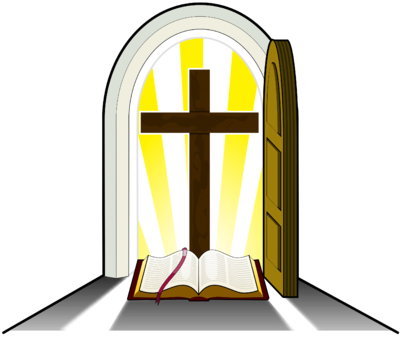
We have been exploring the message of the cross as more than just an offer of forgiveness. We saw that it is a doorway into Kingdom Life through both atonement and victory. Then we examined the cross as a window into the character of the King. Now, we want to view the cross as a pattern for Kingdom Life—not merely something to believe, but something to embody.
The cross-shaped pattern for kingdom living gained popularity in the late 20th-century through writers like Michael Gorman, who coined the term “cruciformity.” He describes the cruciform life as: “A Spirit-enabled pattern of self-giving love shaped by the cross.”
Another major 20th-century influence on the cruciform life has been Dietrich Bonhoeffer’s writings. He didn’t use the term, but he famously wrote, “When Christ calls a man, he bids him come and die.”
The origin of the cross as a symbol for followers of Christ comes from Jesus Himself.
And He was saying to them all, “If anyone wants to come after Me, he must deny himself, take up his cross daily, and follow Me (Luk 9:23).
Jesus established the cross-shaped life as the model of discipleship even before His crucifixion. Martin Luther later emphasized a theology of the cross marked by humility and suffering, a vision already embodied centuries earlier by figures like Francis of Assisi, who pursued radical poverty and service as a way of imitating Christ.
Early 1st-century writers like Ignatius of Antioch (an early bishop of Antioch) promoted and demonstrated the idea of Christian discipleship as participating in Christ’s pattern of suffering. Arrested and condemned to death by Emperor Trajan, he wrote, “I am God’s wheat, and I am being ground by the teeth of wild beasts, that I may be found pure bread of Christ.”
Throughout history, the cross-shaped life has primarily come from one side of our two-sided cross: the atonement with its suffering and humiliation. Martyrdom, throughout much of early church history, was regarded as the pinnacle of the cross-shaped life. Suffering was pursued as a symbol of holiness. This emphasis was understandable in times of persecution—but when isolated, it produced an incomplete vision of kingdom life.
The Apostle Paul provides an example of someone who endured suffering when he couldn’t avoid it. His consistent practice of beginning with Jewish audiences often led to rejection, violence, or expulsion…if not being stoned. He testified that:
We are afflicted in every way, but not crushed; perplexed, but not despairing; persecuted, but not abandoned; struck down, but not destroyed; always carrying around in the body the dying of Jesus, so that the life of Jesus may also be revealed in our body. For we who live are constantly being handed over to death because of Jesus, so that the life of Jesus may also be revealed in our mortal flesh. So death works in us, but life in you (2 Corinthians 4:8-12).
But like the cross, the cross-shaped life has two patterns. One is exemplified by Christ’s atonement, the other by Christ’s victory. Paul understood that kingdom living involved both when he said, “that I may know Him and the power of His resurrection and the fellowship of His sufferings” (Philippians 3:10).
To understand the magnitude of the cross-shaped life, we need to explore both patterns. In this blog, we will look at the cross-shaped life through the pattern of the atonement (PSA). In the next blog, we will look through the lens of Christus Victor (CV).
The Cross-Shaped Pattern of Humility (PSA)
Have this attitude in yourselves which was also in Christ Jesus, who, as He already existed in the form of God, did not consider equality with God something to be grasped, but emptied Himself by taking the form of a bond-servant and being born in the likeness of men. And being found in appearance as a man, He humbled Himself by becoming obedient to the point of death: death on a cross (Philippians 2:4-8).
The atonement does much more than just explain how we are forgiven. It influences how forgiven people live in God’s kingdom. When understood correctly (and not reduced to a simple legal transaction), it produces humility, obedience, gratitude, and loyalty to the King.
Here’s some ways the atonement forms kingdom life:
- Repentance becomes relational, not simply legal.
The cross pattern understands that repentance leads to reconciliation. It is more than forgiveness or the removal of sin’s penalty. It is the glorious return of the intimacy that was lost in the Garden of Eden. Alienation and hostility are replaced with relationship.
When we receive forgiveness, we no longer need to hide or feel shame. With the fear of punishment removed, we can receive the privilege of intimacy with the Creator. Jesus referred to it as abiding in Him. The writer of Hebrews said, “Let us approach the throne of grace with confidence” (Hebrews 4:16).
- Humility becomes the Posture of Kingdom Life
From His incarnation to the cross, Jesus lived a life of humility. He turned the current culture upside down when He told His disciples that life and leadership in His kingdom were achieved through servanthood (Mark 10:42-45). “For even the Son of Man did not come to be served, but to serve, and to give His life as a ransom for many” (vs 45).
Because we enter the kingdom life by grace and not merit, we learn compassion instead of superiority, mercy instead of harsh judgment, and service instead of status-seeking.
Paul begins many of his letters to the churches with the identity statement: Paul, a bondservant of Christ Jesus. A bondservant is more than a servant. It comes from the Greek word doulos, meaning “slave”. Out of the cross-shaped pattern of humility, Paul saw himself as a slave to Christ and a servant to others.
- Gratitude becomes the Engine of Obedience
When we understand that we are “bought with a price” (1 Cor. 6:20) and the merit of
Christ has been transferred to our account; we no longer need to see obedience as transactional or performance-based (“If I obey, God will bless me”).
We live the cross-shaped life in thankful surrender and joyful allegiance to the King who has paid our debt. I obey because I am loved not in order to be loved.
- Identity becomes Saints, not Forgiven Sinners
The cross-shaped life forms a new identity: members of a new family and citizens of a new kingdom. The Apostle John makes this amazing statement:
See how great a love the Father has given us, that we would be called children of God; and in fact we are. For this reason the world does not know us: because it did not know Him. Beloved, now we are children of God, and it has not appeared as yet what we will be. We know that when He appears, we will be like Him, because we will see Him just as He is. And everyone who has this hope set on Him purifies himself, just as He is pure (1 John 3:1-3, emphasis added).
The New Testament overwhelmingly addresses believers by who they are becoming, not merely what they were forgiven from. It is out of our identity as adopted children of the King that we live to honor our new position. We embrace both the benefits and responsibilities of our new family identity.
- Justice Becomes Balanced with Mercy
The atonement shows us that God did not just ignore our sin; He absorbed it. He took it on Himself, showing us that justice and mercy are the pattern of kingdom living. He gives us a model for how we are to deal with others, teaching us to hold truth without cruelty, to forgive without minimizing wrong, and to pursue reconciliation with compassion.
The atonement pattern of kingdom living reflects grace without compromise—truth without arrogance.
Summary
The atonement (PSA) teaches us to live in Christ’s kingdom as forgiven, humbled, grateful citizens—joyfully obeying King Jesus because our debt has been paid and our relationship restored.
Coming Next
The cross-shaped life is a kingdom pattern shaped not only by Christ’s atonement, but also by His victory. In our next blog, we will explore how the cross is not only the place where Jesus humbled Himself, but the battlefield where He triumphed—defeating sin, death, and Satan, establishing the pattern for a life of kingdom victory.
For Reflection
- Which image of the cross resonates most with you right now—doorway, window, or pattern? Why?
- Throughout church history, the cross-shaped life has often emphasized suffering and self-denial. What are the strengths of that emphasis? What are the dangers when it stands alone?
- How does understanding atonement as relational (not merely legal) reshape the way you think about repentance and forgiveness?
- The blog contrasts living as “forgiven sinners” versus living as “saints” and adopted children. Which identity most shapes your daily decisions? How does that show up?
Leave a Reply