Time is one of the four dimensions of our physical world—three of space and one of time. Unlike spatial dimensions, time moves in only one direction: forward. This unidirectional flow gives time a distinct role in shaping our experience of reality. In science fiction, we may see time moving backward or being manipulated, but in the real world, time marches forward without pause or rewind.
Religions have wrestled with the nature of time for centuries. Many Eastern religions see time as cyclical, repeating endlessly in a loop. Judaism and Christianity see time as linear, moving toward a definite conclusion—a final day when God sets everything right.
Even the ancient Greeks had two words for time:
• Kronos – measurable time, the ticking of the clock.
• Kairos – a meaningful, opportune moment.
Where kronos is quantitative, kairos is qualitative. A kairos moment is when time seems to stop—when something significant happens that leaves a mark far deeper than minutes or hours.
I experienced such a moment years ago, sitting with my wife on a quiet beach in Hawaii at sunset as we celebrated our 25th wedding anniversary. The clock may have ticked on, but time, for us, stood still. That moment didn’t just happen in time—it transcended it.
Kairos in the Life of Jesus
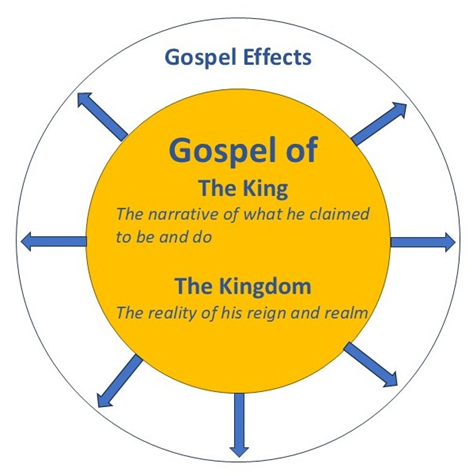
In the life of Jesus, recorded in the four Gospels, we see approximately 30 years of kronos time. Yet within that span are seven defining kairos moments—unequal in duration but equal in spiritual significance. These moments, I believe, form the heart of the Gospel. Think of them not just as scenes in a biography but as Acts in a divine drama: The Gospel of the Risen King.
The Gospels weren’t written to be reduced to a single verse. They are full, rich portraits of Jesus. Matthew wrote 28 chapters, Mark 16, Luke 24, and John 21—all so we wouldn’t forget or distort the story.
Within their pages, we find seven defining kairos moments—each essential to understanding who Jesus is and what He came to do:
Prelude
- Incarnation
- Declaration
- Crucifixion
- Resurrection
- Ascension
- Coronation
- Examination
Each moment is critical. Take one away, and the picture is incomplete. Put them together, and you see the full “in Him” we are called to believe (John 3:16). Together, they form the amazing epic cosmic story we are invited into.
Act 1: The Incarnation– Eternity Takes a Breath
It began quietly, not with thunder or spectacle, but with a silent breath.
The curtain of eternity lifted in a backwater village called Bethlehem. A teenage girl — no royalty, no riches — cradled a newborn, her arms trembling with wonder. Her name was Mary. Awed, confused, humbled — and yet, somehow, willing. She had agreed to play her part in the greatest story the world would ever know, though she could scarcely comprehend it.
This was no ordinary child. This was the eternal Son stepping into time — kairos erupting into kronos. In a world that counts moments in hours and years, this moment defied counting. Time didn’t just pass; it stood still.
Only a handful of witnesses were present at the start. A group of shepherds stumbled into the scene, still smelling of sheep and startled by angelic choirs. A band of scientists from the East, following a strange star, arrived later with questions and gifts. And somewhere in a palace in Jerusalem, a paranoid king began to feel his throne tremble.
But the real audience, invisible to earthly eyes, was heavenly. Angels watched in hushed awe as the Creator entered creation. Eternity became an embryo. Glory hid in shadows. Perfection grew vulnerable. Infinity slipped quietly into the fragile frame of a baby, wrapped in rags, crying in the night.
Eternity Enters Time
John would later write, “The Word became flesh and dwelt among us, and we saw His glory…” And Paul would explain, “In Christ lives all the fullness of God in a human body.” But in that moment, it was simply a mother watching her son breathe for the first time, and perhaps whispering his name.
Think about that for a moment: eternity entered time. The Creator became part of His creation. Infinity squeezed into an infant.
Jesus. A common name, really: the Hebrew Yeshua (salvation). Yet in that name was the mystery of divine intention. This child was not beginning his life; he was entering ours.
And he knew it. Years later, he would tell his followers, “I came from the Father and have come into the world; I am leaving the world again and going to the Father.” He spoke with the confidence of one who remembered eternity.
The paradox remained, and still remains: how could he be fully God and fully man? The early church, wrestling with this holy tension, declared him one person with two natures — indivisible, unconfused, inseparable.
As the first Act draws to a close, the star fades. The visitors slip away. Herod lashes out in fear. And under cover of night, Mary and Joseph flee with the child, crossing a harsh desert to Egypt. God, once enthroned in heaven, now rides silently on a donkey, a refugee in a foreign land.
The King has come
But not like any king the world expected.
What’s Next?
The Incarnation is just the beginning. Six more kairos moments follow—each one pulling back the curtain a little more on who Jesus is and what He came to do. Together, they form the heart of the Gospel: not just good news, but the best news the world has ever heard.
For Discussion
1. How can we train ourselves to notice and embrace kairos moments in our walk with Christ?
2. Kronos vs. Kairos. Can you recall a kairos moment in your own life when time seemed to “stand still”?
3. What strikes you most about the way Jesus entered the world—quietly, vulnerably, and unexpectedly?
4. How does the Incarnation shape your understanding of God’s closeness and empathy with humanity?
5. Why do you think God chose shepherds, magi, and even hostile King Herod as part of the Incarnation story?